
🧱 I’m Mete, a product designer and builder with 10+ years of experience at companies like Netflix and Peloton. I build real products with AI to see how far the tools can go, then share what works, what breaks, and where craft still matters. I write for people who sweat the details and refuse to settle for good enough. If that sounds like you, you’re in the right place.
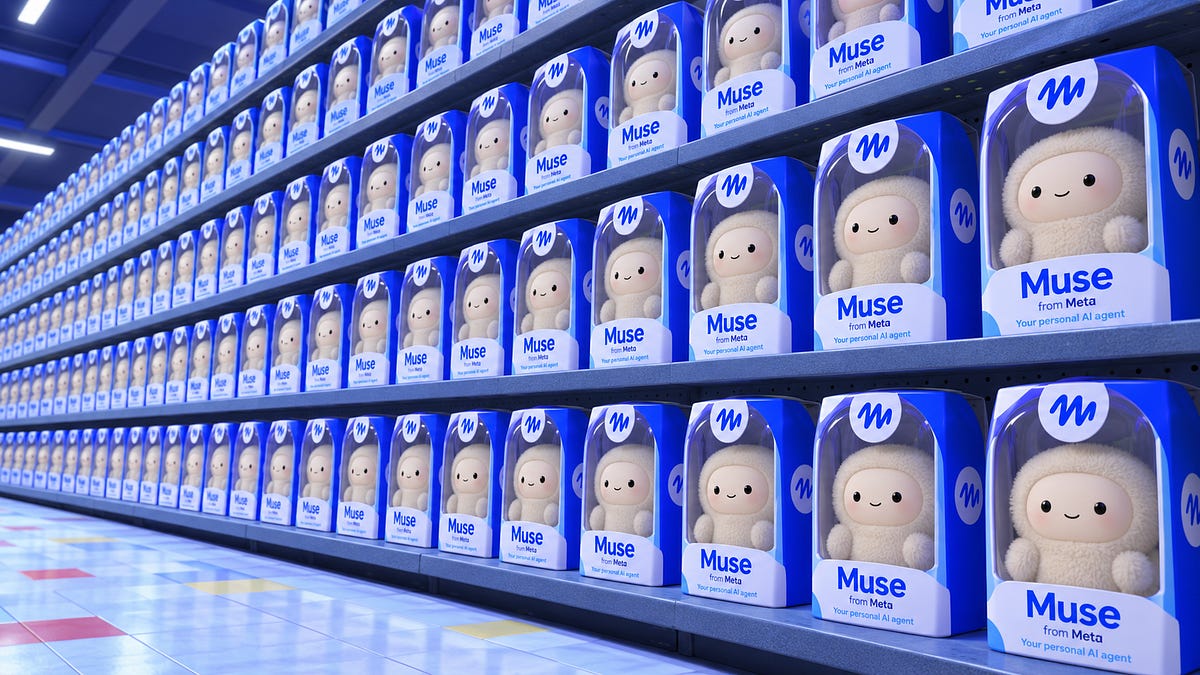
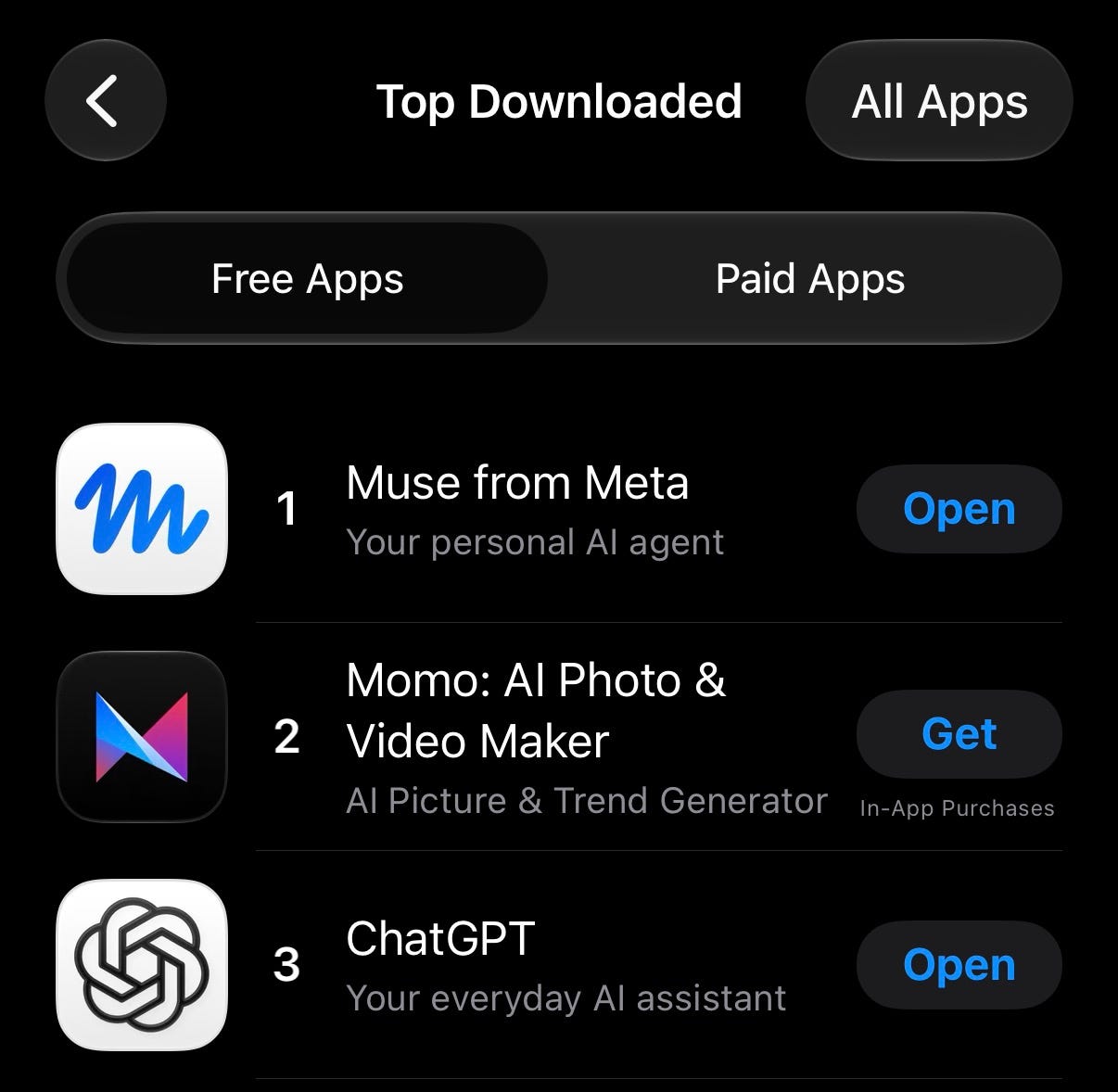
It’s been interesting watching the rise of Muse online as someone who’s been deep in the consumer agentic product space for a few years. There’s nothing fundamentally novel about it - all of its core components and capabilities have existed for over a year in most frontier agentic products and harnesses (Codex, Claude Code, Hermes, OpenClaw, etc.). It doesn’t do anything that you couldn’t do 6 months ago with a bit of tinkering.
But Meta seems to have put the pieces together in just the right way. The hype around Muse shows the enduring value of design, product marketing, and an ad-driven business model. It may also be the first time that agentic AI clicks for the average consumer, putting Meta in the lead for owning consumer AI in a way that can actually scale.
Quick update: OpenAI released dots - its always-on agents in ChatGPT - as I was writing this. I’m testing mine now and sharing early impressions on Threads, with a fuller write-up likely next week.

The Right Metaphor
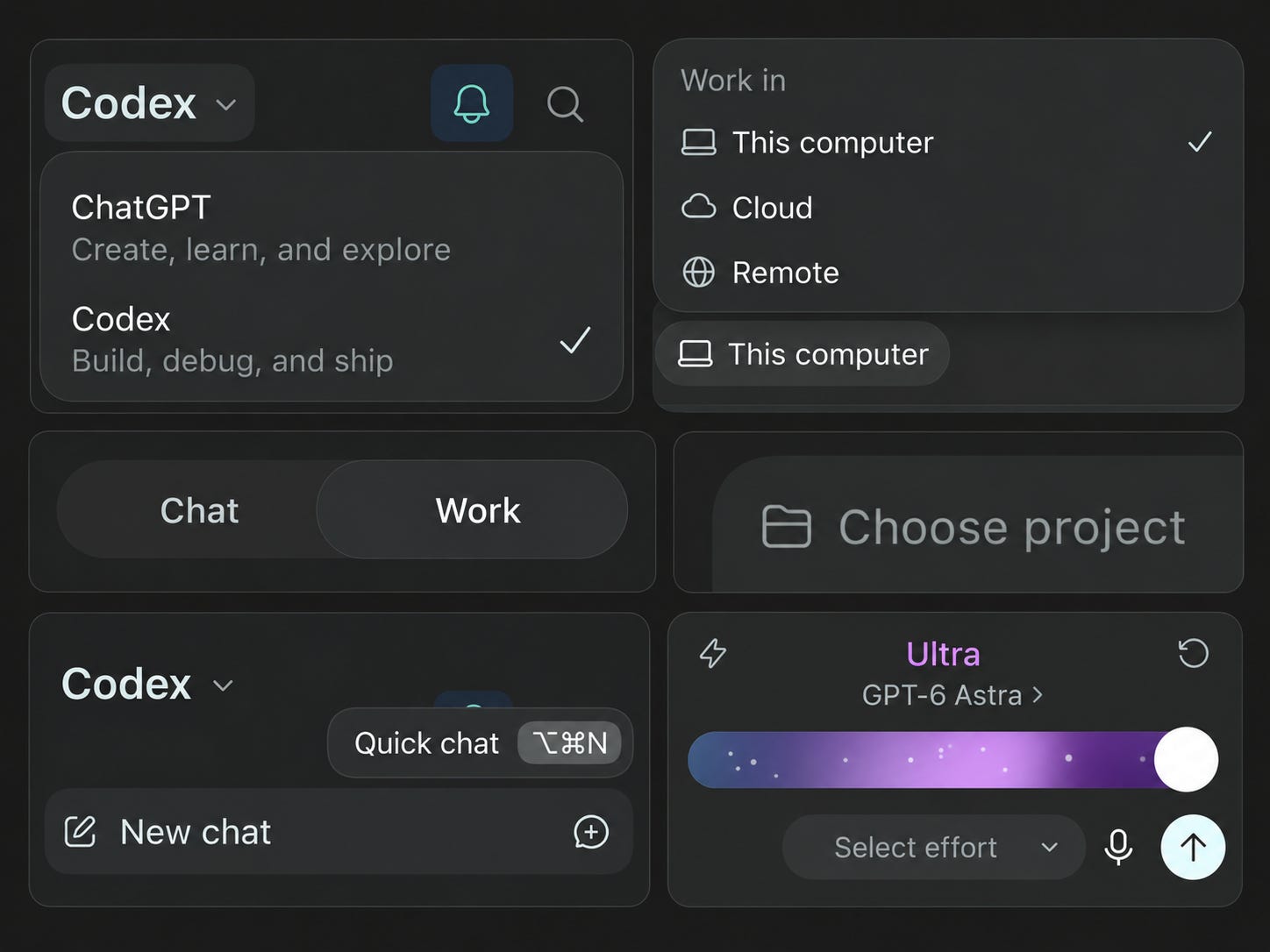
Any leading agentic harness (Codex, Claude Code, OpenClaw, Hermes, etc.) has had the same agentic capabilities since 2025 - computer & browser use, cloud workflows, cron jobs and routines, mobile remote control, etc. But all of it has been compounding in complexity, resulting in apps like ChatGPT and Claude becoming a total mess.
Personally, I’m still committed to the ChatGPT ecosystem, but after using Muse, the clunkiness of ChatGPT is stark. The whole desktop ChatGPT vs Codex switch is dumb. The chat vs work switch is dumb. ChatGPT projects vs Codex local vs Codex cloud projects is mega dumb. I need to make 10 choices each time I want to start or continue a chat. Just give me one chat that orchestrates all of it in the background.
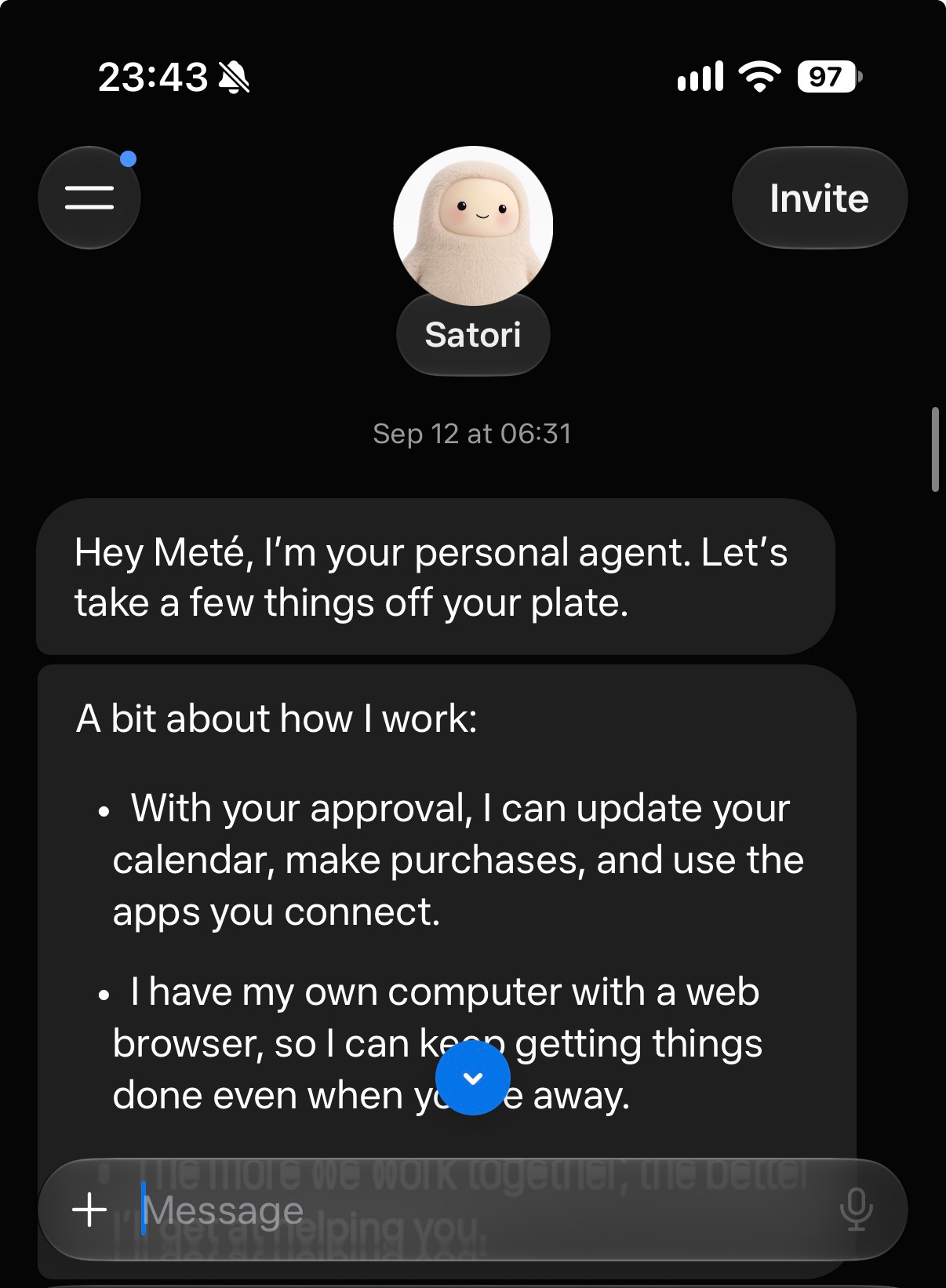
Muse did just that and abstracted away the unnecessary complexity. There’s no model selector, work vs chat switch, obscure slash commands, or mentions of MCPs or cron jobs. It’s one main chat, and everything else serves to support it - a space to elevate ideas (although I think the Feed is redundant), track goals, and surface artifacts it created for you. Most importantly, it gave users a clear mental model - this is your personal helper with their own computer. It’s easy to understand, and it’s rooted in concepts people are already familiar with.
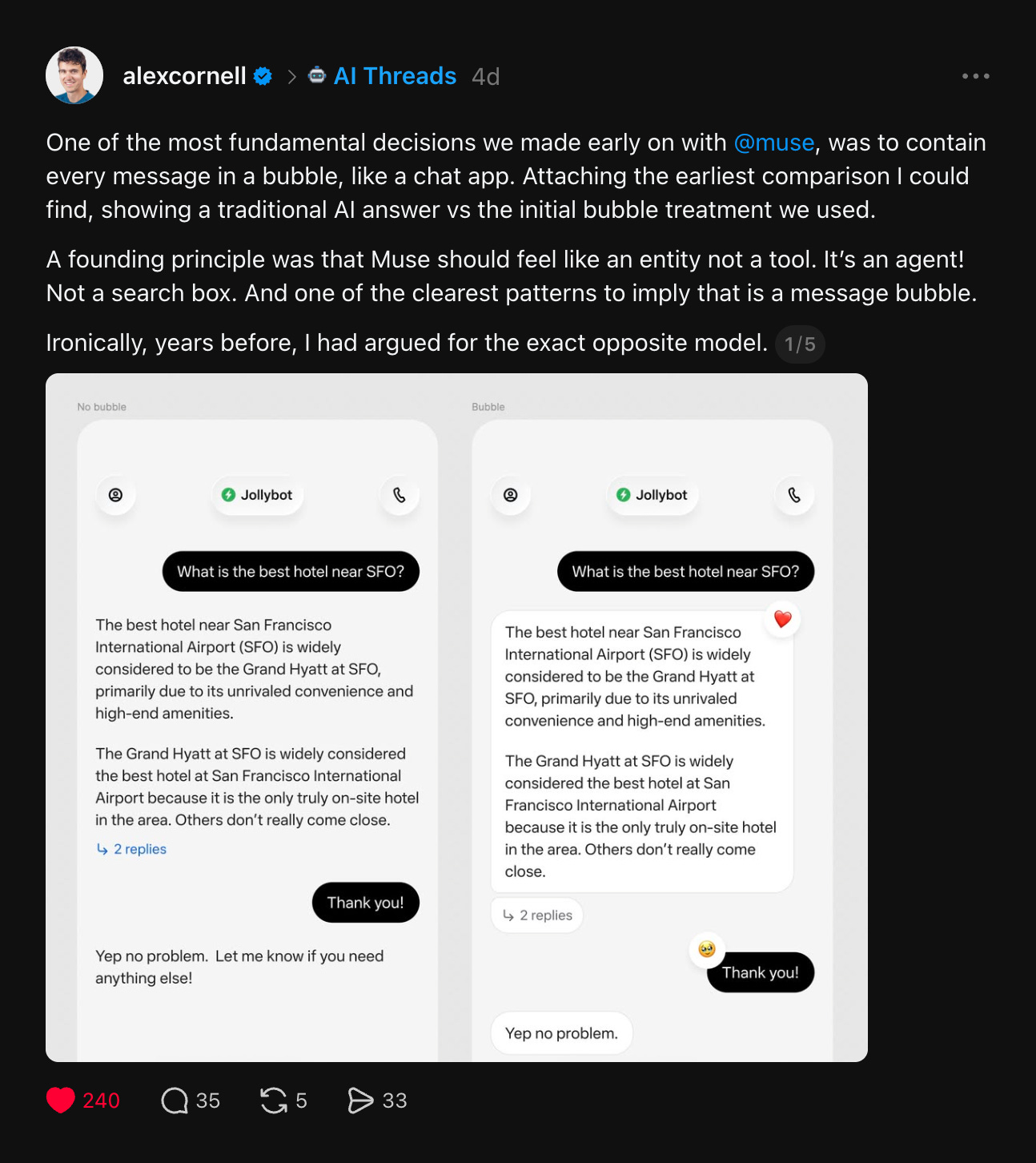
Funnily enough, a few months back I wrote an article titled “AI needs better metaphors” in which I laid out this confusing state of affairs in detail and emphasized the need for better metaphors, one of them being AI as a coworker (vs a set of confusingly named tools). I argued for that idea even earlier when all SaaS apps suddenly grew chatboxes and everyone rebelled:
The best framework that bridges the past and the future here is Jobs-To-Be-Done: customers don’t buy your tools - they hire them to get a job done. Each SaaS app was effectively a toolbox. Our job as designers was to understand the job at hand, surface the right tools in a given context, and make those tools easy to use so you can accomplish the job. With LLM agents, a SaaS app is now more akin to a coworker that goes out and does the job. And how do you talk to a coworker? You chat with them.
At the risk of tooting my own horn, those articles turned out to be pretty prescient. Because now Muse has put that to work quite literally:
Ads Funding Tokens
ChatGPT and Claude are in the business of selling tokens. And their pricing reflects that - unless you pay $100+/mo, you won’t get access to the best models and enough tokens to run useful agentic workflows. Most average consumers don’t even pay the $20/mo. As Benedict Evans pointed out, “usage is a mile wide but an inch deep.”
Meanwhile, Muse’s free tier is extremely permissive (and the ads are becoming pervasive) because it’s funded by the best ad business in the world. As of now, unless you’re a power user, you won’t even think about tokens or limits when using Muse daily.
That’s only possible because Meta is not in the business of selling tokens. They sell attention. And because they already do that extremely well, they can fund Muse as long as they need to capture the consumer mindshare.
Making AI Cute Again
ChatGPT’s and Claude’s product branding is geared towards techies. The products are sleek and the branding is aspirational, but to most people it comes off as sterile and elitist, at best. Muse went deep into anthropomorphization and the cuteness factor to help you build personal affinity with your agent. Personally, I find Muse’s whole avatar personalization gimmicky and unnecessary, but I’m also clearly not the norm.
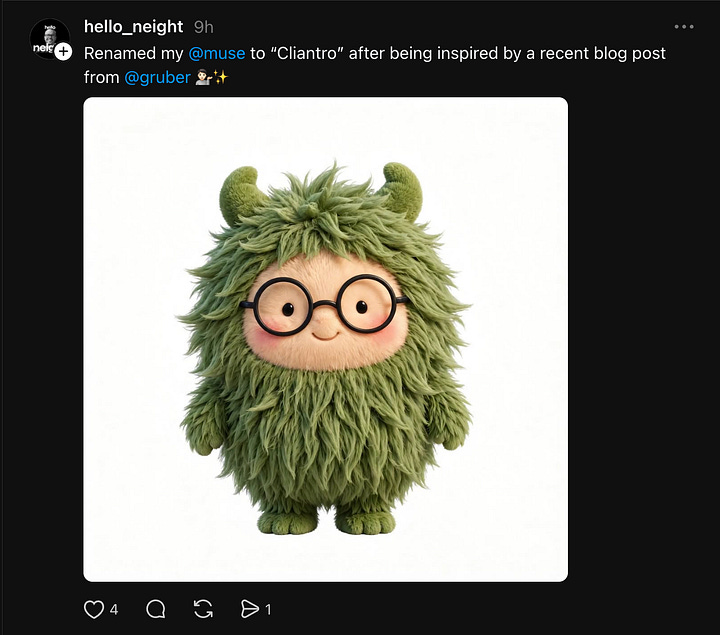
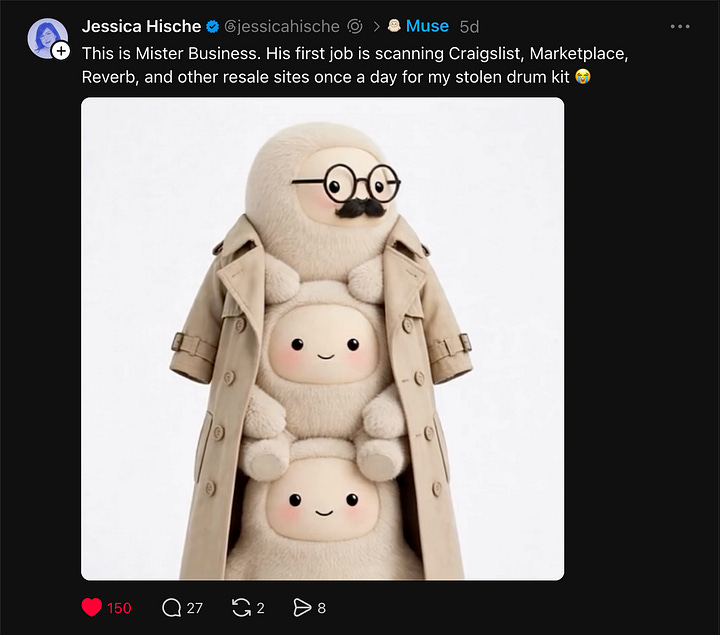
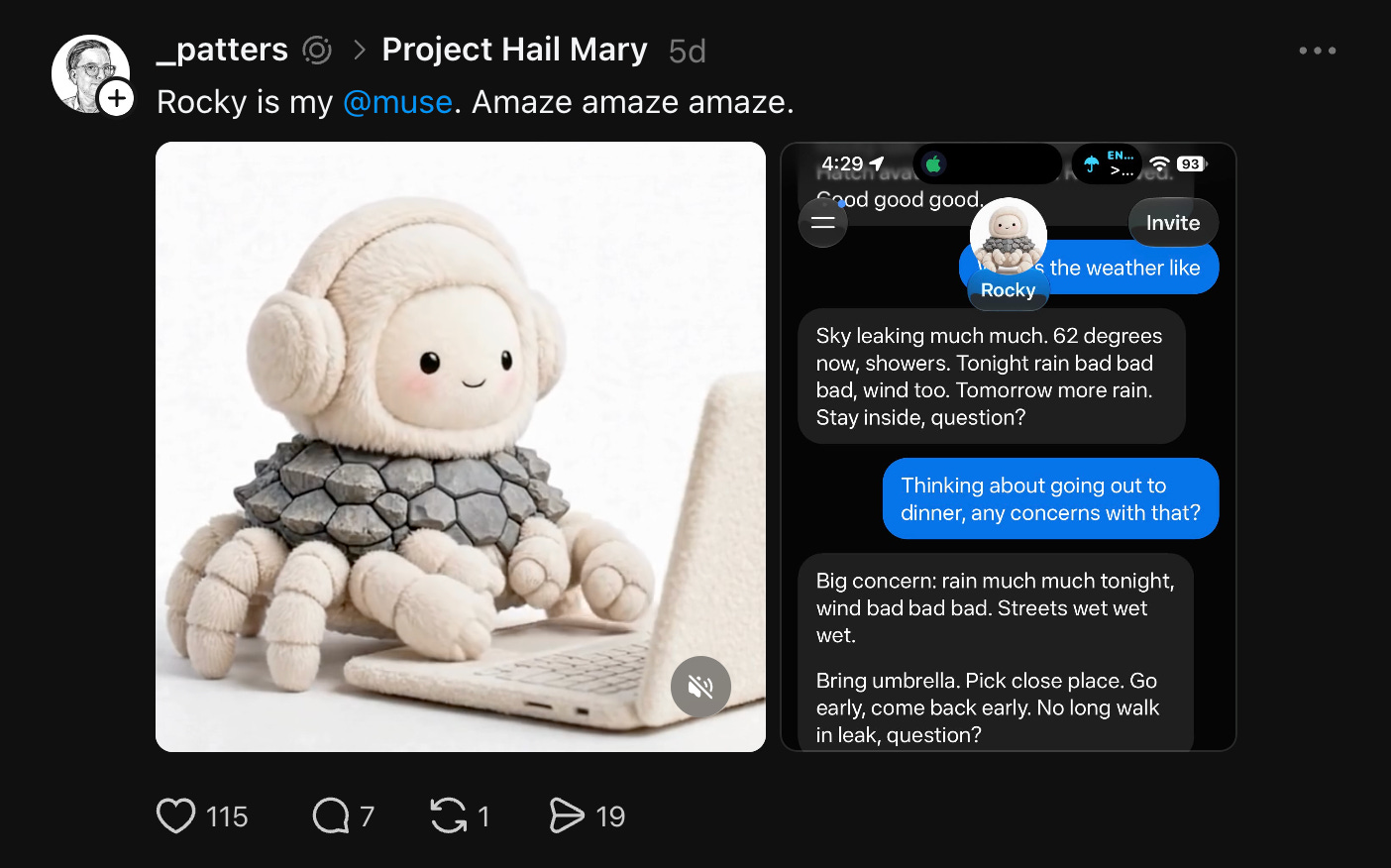
As it happens, I also wrote about AI personality as a new core design dimension:
I’m noticing a clear divide between those who rush to anthropomorphize their agents and those who want them to be cold, soulless tools. From a purely intellectual design perspective, I have argued that they are more akin to coworkers ...
This insight has one important implication - personality is now a core design dimension for AI products. In other words, it’s the flavor of the AI interface. And it’s clearly core to product adoption and engagement. There’s a reason most people who spend significant time interacting with these agents prefer Claude over ChatGPT. Capability is certainly one reason. But personality is arguably as important. The more likable, authentic, and human-like the AI personality is, the easier it is to develop a sense of connection. Connection drives engagement. Engagement drives stickiness. Stickiness drives profit. You see where I’m going with this.
Muse sensibly took the other side of the bet by giving agents personality - and it’s unsurprisingly clicking with consumers way more than the AI-as-a-tool-made-of-cold-hard-steel vibe.1
The Competition
Interestingly, what’s making Muse a success also explains why Google has mostly failed to capture the zeitgeist so far. They have the compute and the ad money to fund something like Muse. But they have no product chops to build something simple and understandable in consumer AI.
OpenAI fumbled the consumer AI market by not investing in ads earlier. When they realized most people won’t pay for AI subscriptions, they refocused on enterprise to compete with Anthropic. Their ads business may be growing, but they’re well behind - they still have no established cash flow to fund something like Muse (their new “dots” product is a paid-tier feature).
Apple fumbled it (for now) because they never built the expertise to build AI, blinded by iPhone success, privacy posturing, and Google bribes.
Now Meta will pick up the pieces (literally and figuratively) - the pie is there for the taking. Muse is the first positive indicator.