
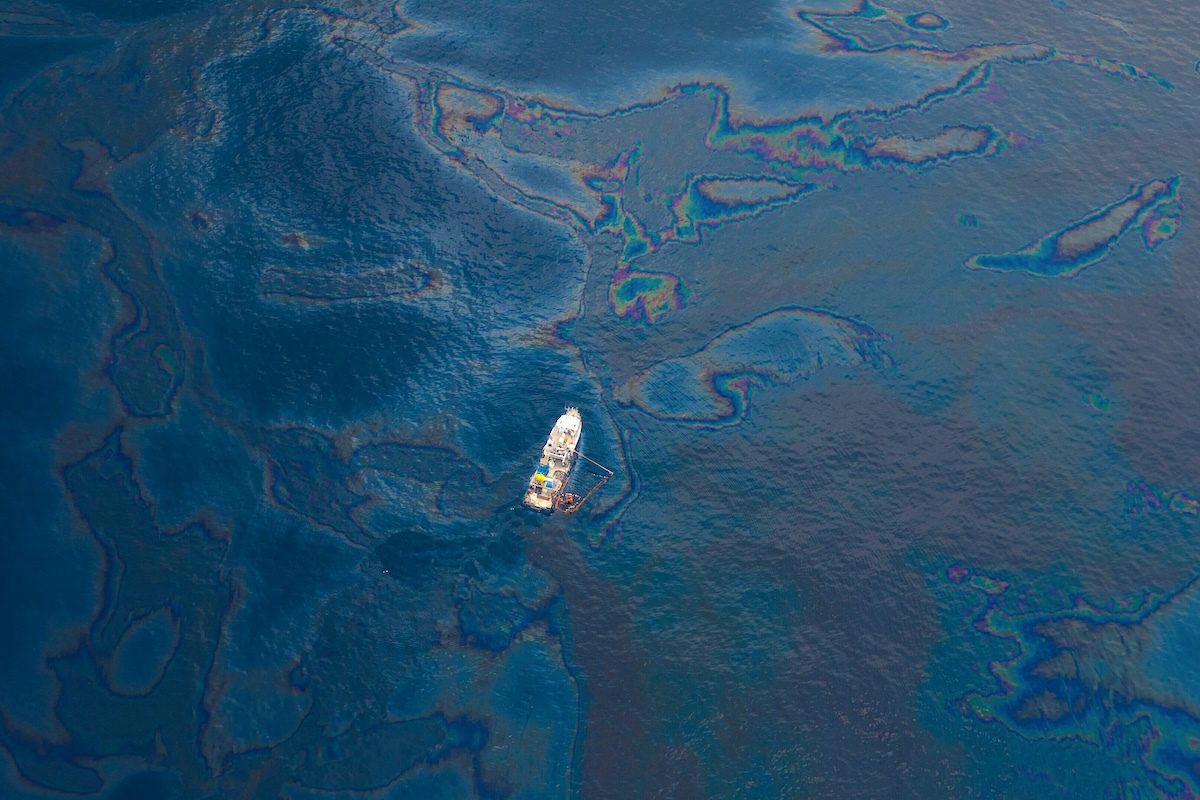
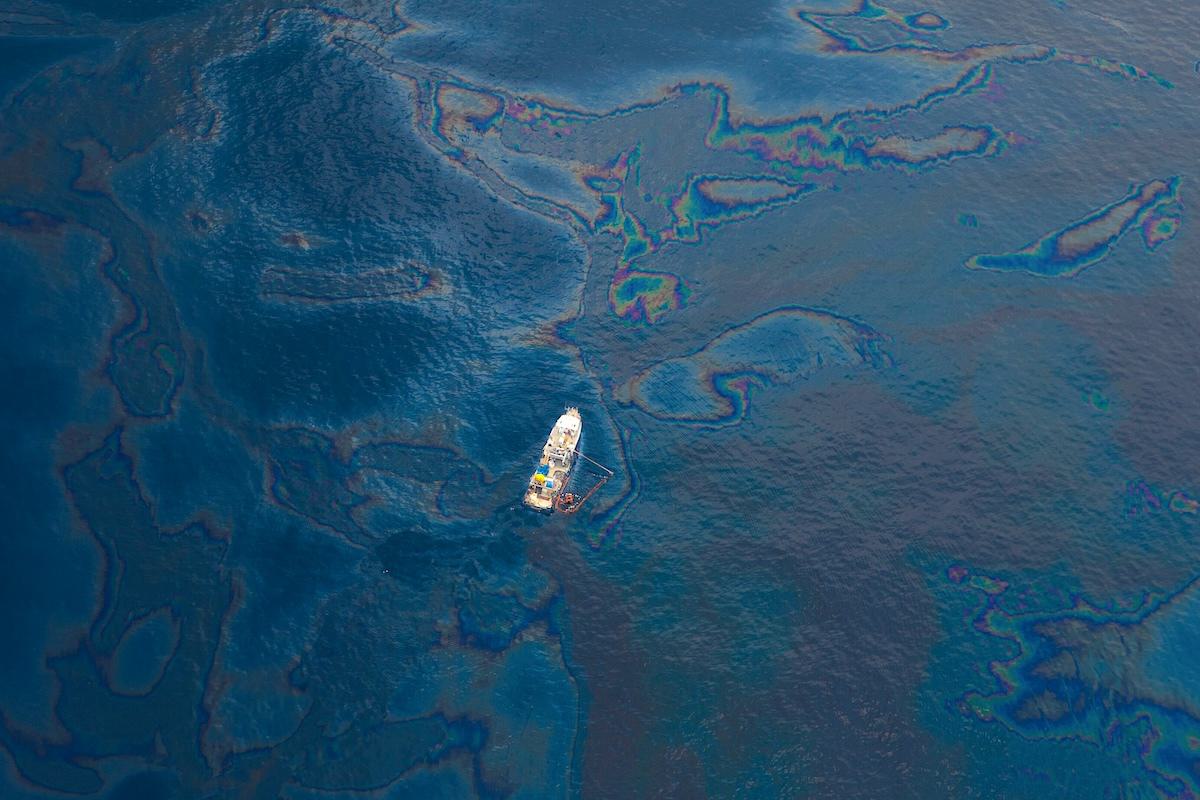
An oil slick in the Gulf of Mexico after the Deepwater Horizon oil spill in 2010. Kris Krüg via Wikipedia
Sixteen years after an explosion on the Deepwater Horizon oil rig unleashed more than 4 million barrels of oil into the Gulf of Mexico, life in the deep sea has yet to recover.
A new study finds that in the first few years after the 2010 disaster, populations of octopus, squid, krill, shrimp, and lanternfish declined by at least 60 percent. The research, based on acoustic surveys and thousands of netted samples across a broad swath of the Gulf of Mexico, found little evidence that life in the deep sea has bounced back.
The study, published in the Proceedings of the National Academy of Sciences, described the losses as “the fastest and most severe” decline of animal life in the ocean layer that extends from about 600 feet deep to more than two miles down. While researchers stopped short of concluding that the oil spill had caused the declines, they said it was “the most parsimonious explanation.”
Since the disaster, scientists have found oil-related compounds in the flesh of squid and octopus and in fish eggs deep underwater, contamination that they say can impair reproduction and development or lead to an early death. Lingering pollution may make it harder for deep-sea fish that are guided by their sense of smell to find mates.
Beyond the drop in population numbers, the new study also found some declines in genetic diversity. The risk, authors say, is that populations may not harbor the genetic traits needed to survive in a rapidly changing world.