
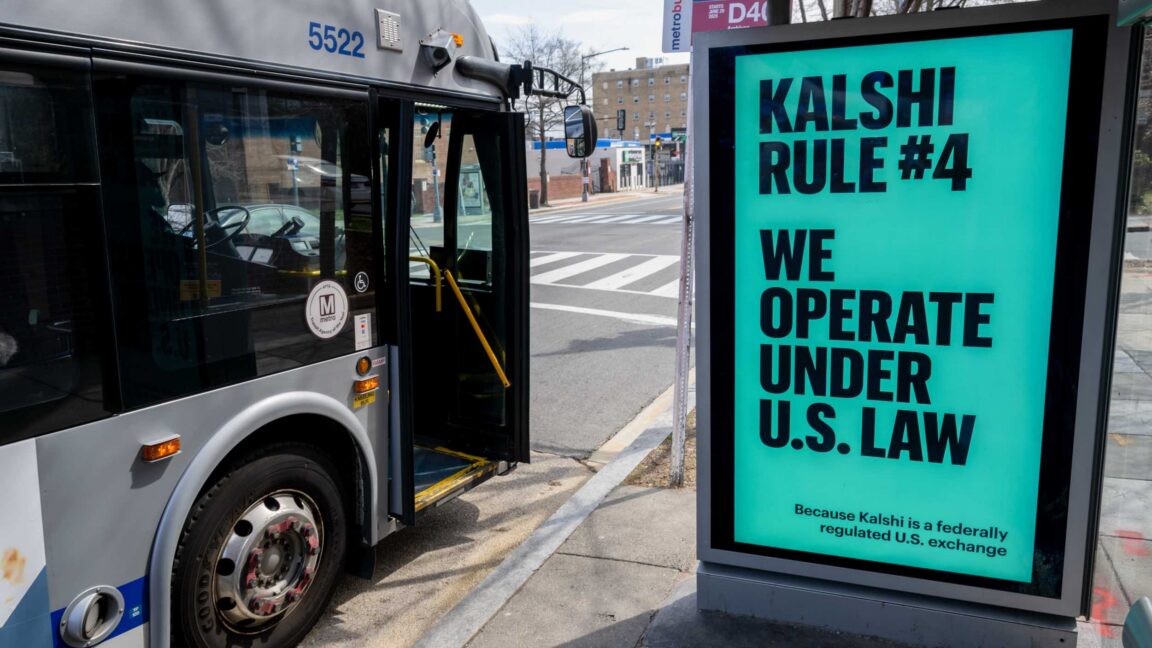
Kalshi can’t get orders blocking state gambling laws
Arkansas filed its lawsuit about a week after Utah Attorney General Derek Brown lodged criminal charges against Kalshi and its founders for violating Utah’s ban on gambling. A federal judge in Utah previously ruled that Utah can enforce its anti-gambling laws against Kalshi.
Many other states are trying to enforce their gambling laws against Kalshi, and the Supreme Court may ultimately decide whether they are able to do so. Kalshi has won some rulings, but Griffin may feel emboldened by the company’s recent court losses. For example, the US Court of Appeals for the Ninth Circuit ruled in August that Nevada can stop the prediction market from allowing sports bets. A panel of three judges unanimously found that sports bets on Kalshi are not swaps and can be regulated under state gambling laws.
Kalshi sought to overturn the judges’ panel ruling by seeking a rehearing in front of the entire Ninth Circuit appeals court, which has 29 judges. None of the judges supported a rehearing.
“The full court has been advised of the petition for rehearing en banc and no judge has requested a vote on whether to rehear the matter en banc,” the court said in a ruling yesterday. “The petition for panel rehearing and the petition for rehearing en banc are denied.”
Lower-court rulings upheld
Kalshi also lost on Tuesday in the Second Circuit, where it was trying to overturn earlier losses to New York and Connecticut. Kalshi sought preliminary injunctions to prevent New York and Connecticut from enforcing their gambling laws, but both requests were rejected by US district court judges.
A plaintiff seeking a preliminary injunction must show that it is likely to succeed on the merits of its case, and judges decided that Kalshi had not done so. The Second Circuit appeals court considered Kalshi’s losses to New York and Connecticut in a single case and upheld the lower-court decisions.