

React Native Google Mobile Ads






React Native Google Mobile Ads lets you monetize your app with Google AdMob or Google Ad Manager. It wraps the native Google Mobile Ads SDKs for iOS and Android.
- Expo first: install with
npx expo installand configure through the bundled config plugin. Bare React Native CLI apps are fully supported. - Every format: app open, banner, native, interstitial, rewarded and rewarded interstitial, plus Ad Manager, consent (UMP) and mediation.
- React-friendly: imperative ad classes, React hooks, and preload pools for apps that show many ads.
- Typed and tested: written in TypeScript with a generated API reference, and unit and end-to-end tested on both platforms.
Quick start (Expo)
npx expo install react-native-google-mobile-ads expo-dev-clientAdd your AdMob App IDs to the config plugin in app.json, then create a development build (the module does not run in Expo Go):
{
  "expo": {
    "plugins": [
      [
        "react-native-google-mobile-ads",
        {
          "androidAppId": "ca-app-pub-xxxxxxxx~xxxxxxxx",
          "iosAppId": "ca-app-pub-xxxxxxxx~xxxxxxxx"
        }
      ]
    ]
  }
}
Next: gather consent, initialize the SDK and show your first ad by following Getting Started. Bare React Native CLI projects start at Install with React Native CLI.
Ad formats
App open
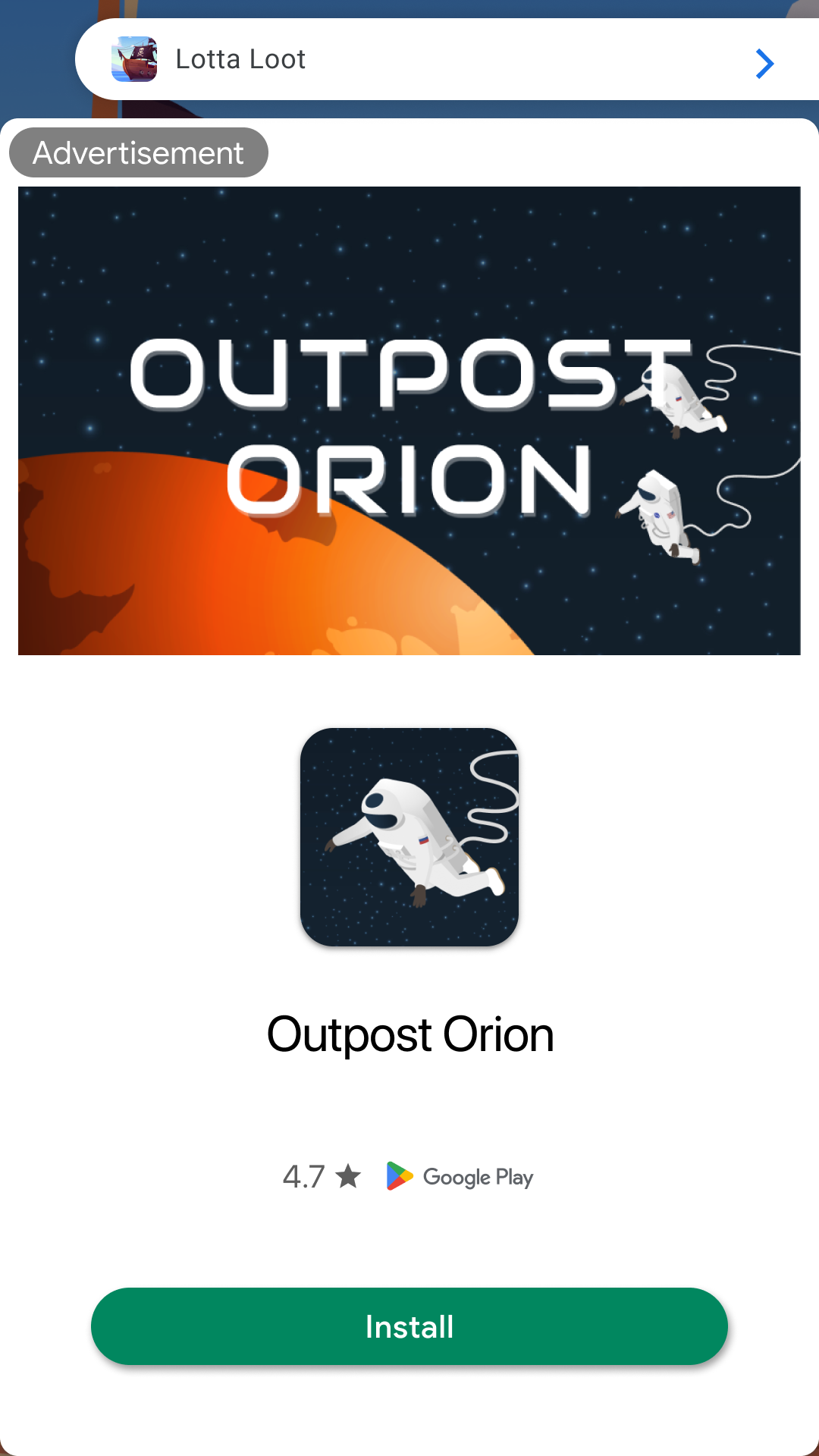
App open ads are a special ad format intended for publishers wishing to monetize their app load screens.
Banner
Banner ad units display rectangular ads that occupy a portion of an app's layout. They stay on screen while users are interacting with the app, either anchored at the top or bottom of the screen or inline with content as the user scrolls. Banner ads can refresh automatically after a certain period of time.
Anchored adaptive
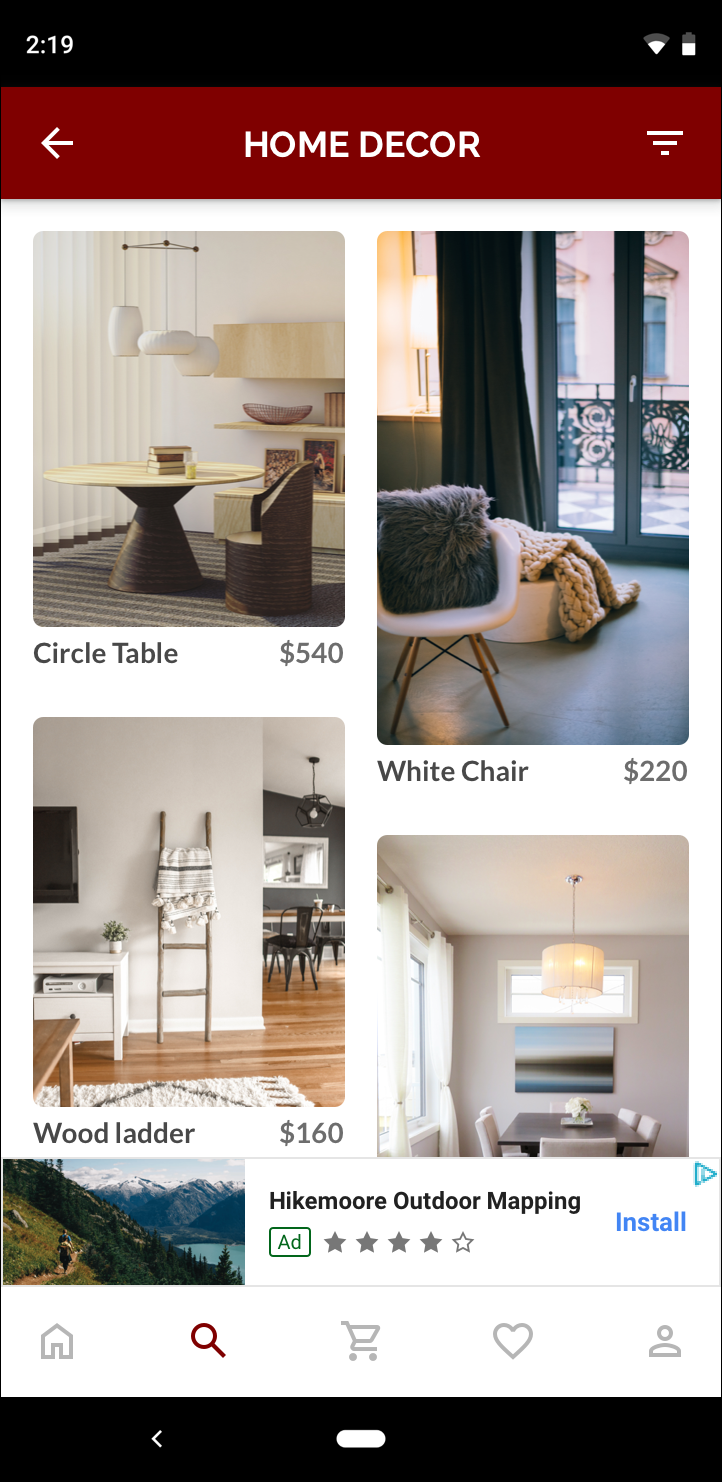
A dynamically sized banner that is full-width and auto-height. Anchored adaptive banners are expected to be always on-screen, locked to the screen’s top or bottom.
Inline adaptive
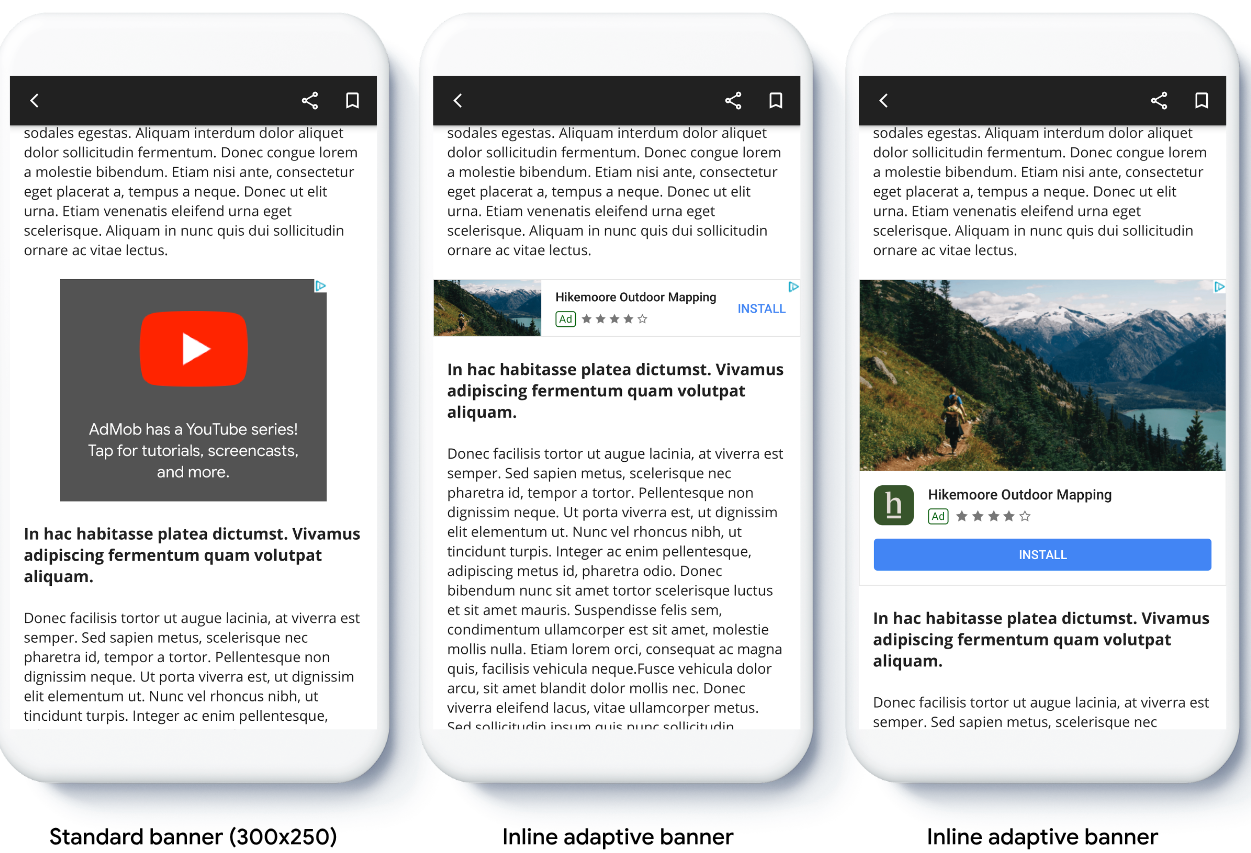
Inline adaptive banners are larger, taller banners compared to anchored adaptive banners. They are of variable height, and can be as tall as the device screen. They are intended to be placed in scrolling content.
Collapsible
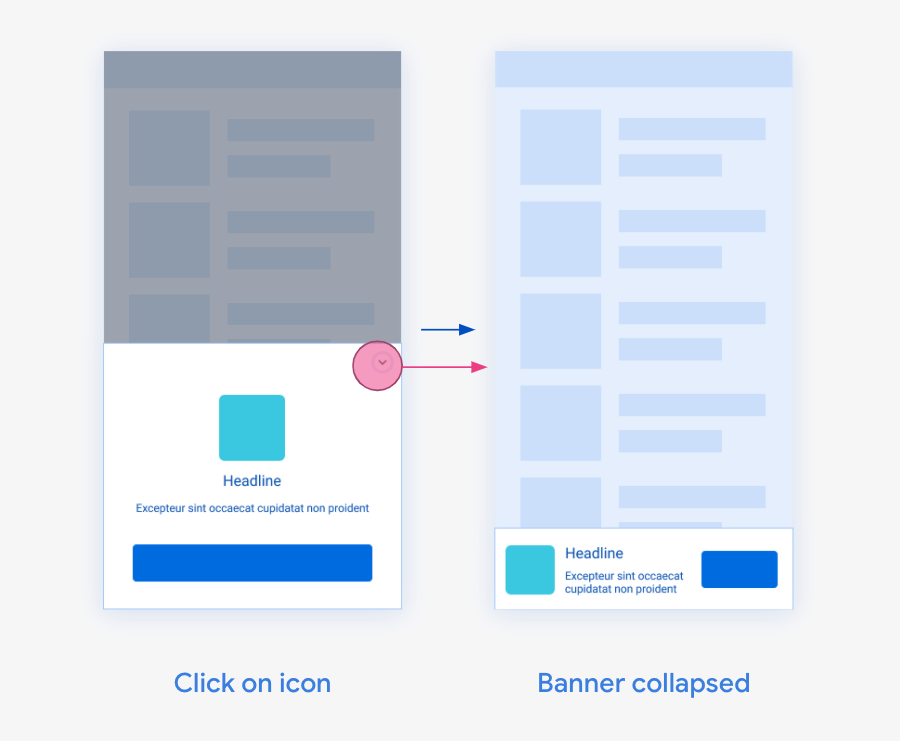
Collapsible banner ads are intended to improve performance of anchored ads that are otherwise a smaller size.
Fixed size (legacy)
The Google Mobile Ads SDK supports fixed ad sizes for situations where adaptive banners ads don't meet your needs. Banner (320x50), Large banner (320x100), Medium rectangle (300x250), full banner (468x60) and leaderboard (728x90).
Native
Native ads allow you to customize the look and feel of the ads that appear in your app. You decide how and where they're placed, so the layout is more consistent with your app's design.

Interstitial
Interstitial ad units show full-page ads in your app. Place them at natural breaks & transitions in your app's interface, such as after level completion in a gaming app.

Rewarded
AdMob rewarded ad units allow you to reward users with in-app items for interacting with video ads, playable ads, and surveys.

Rewarded Interstitial
Rewarded interstitial is a type of incentivized ad format that allows you to offer rewards for ads that appear automatically during natural app transitions. Unlike rewarded ads, users don't opt in to view a rewarded interstitial, but Google requires an intro screen with clear reward messaging and an option to skip before the ad shows.

Platform requirements
Version 17 requires React Native 0.86.0 or newer with the New Architecture enabled. The Legacy Architecture is no longer supported. Expo projects need a development build (Expo Go is not supported). The minimum operating system versions are iOS 15.1 and Android API level 24. See Prerequisites for the full list.
On Android you can choose the classic Google Mobile Ads SDK (default) or the GMA Next-Gen SDK at build time; the JavaScript API is the same either way. See GMA Next-Gen SDK (Android).
Native implementation status
Every surface below works on the New Architecture. Surfaces marked To-Do still run through React Native's interoperability layer and have not yet been ported to a native Turbo Module or Fabric component; the port does not change the JavaScript API.
| Platform | Feature | Status | | -------- | -------------------------------------------------------------------------------------------------------------------------------------------------------------- | ------------------------------------------------------------- | | iOS | Mobile Ads SDK Methods (Turbo Native Module) | ✅ Complete | | iOS | Banners (Fabric Native Component) | ✅ Complete | | iOS | Full Screen Ads (Turbo Native Module) | ✅ Complete | | iOS | Native Ads (Turbo Native Module, Fabric Native Component) | ✅ Complete | | iOS | User Messaging Platform (Turbo Native Module) | ✅ Complete | | iOS | EventEmitter (Turbo Native Module) | ⏳ To-Do | | Android | Mobile Ads SDK Methods (Turbo Native Module) | ⏳ To-Do | | Android | Banners (Fabric Native Component) | 🟡 Partial: multi-format banner ported, standard banner To-Do | | Android | Full Screen Ads (Turbo Native Module) | ⏳ To-Do | | Android | Native Ads (Turbo Native Module, Fabric Native Component) | ✅ Complete | | Android | User Messaging Platform (Turbo Native Module) | ⏳ To-Do | | Android | EventEmitter (Turbo Native Module) | ⏳ To-Do |
Documentation
- Getting Started: the integration path from install to first ad
- Install with Expo (recommended) or Install with React Native CLI
- Ad formats, including React hooks and Google Ad Manager
- Consent & privacy
- Testing and Common reasons ads do not show
- Using with React Native Firebase
- Migrating to v17
- API reference
For AI coding agents
This package ships an integrator guide for coding agents at
AGENTS.md
(also installed at node_modules/react-native-google-mobile-ads/AGENTS.md). Point your agent at it
before it writes ad code. See For AI agents.
Contributing
License
- See LICENSE

Built and maintained by Invertase.