
When you talk about Papua New Guinea, people may say, oh, is that the place where:
Nobody is sure if its population is 10 million or 17 million
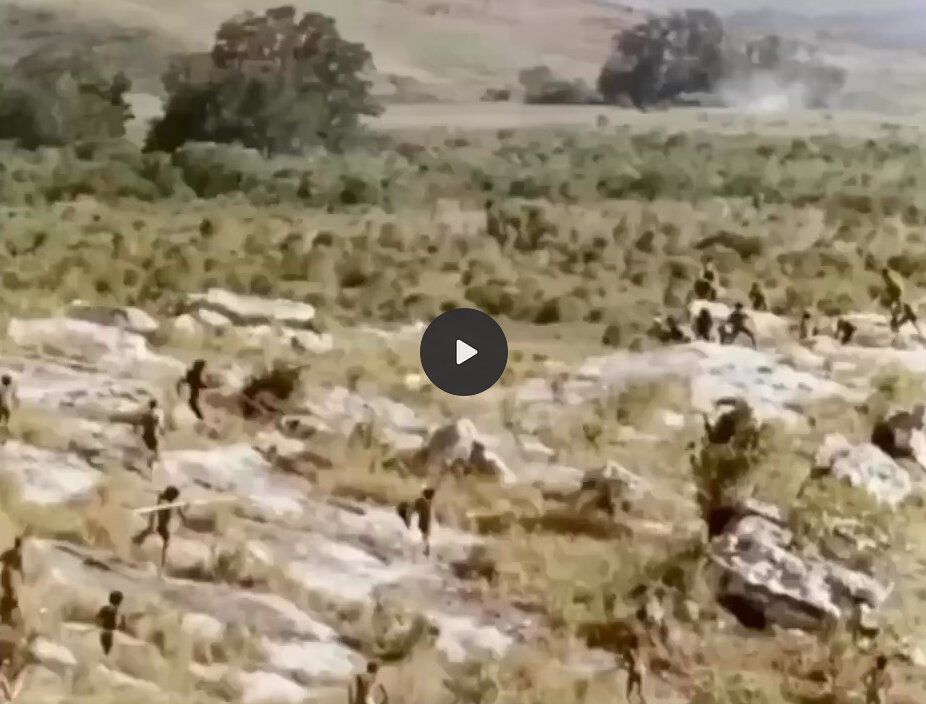
They were having bow and arrow battles as late as 1963:

The capital is the most dangerous city in the world
They practice cannibalism, and Michael Rockefeller was likely eaten there, and maybe Joe Biden’s uncle too - and one group ate their dead relatives’ brains at funerals so consistently that they gave themselves a mad cow type disease called kuru, which killed a large percentage of their population and then, within a few generations, evolved a genetic mutation that protects against it, one of the fastest cases of natural selection ever documented in humans
Jared Diamond thinks the people there are genetically smarter than Europeans
But beyond these interesting tidbits, most people don’t actually have a conceptual understanding of what New Guinea is. Up until a few weeks ago, I had no idea either, until I randomly stumbled upon one of the most mind blowing books I’ve read in my life: First Contact: New Guinea’s Highlanders Encounter the Outside World, which describes the 1930 discovery of a million people living in the highlands of New Guinea—a group the colonial governments and local coastal populations had no idea existed, and who themselves had no knowledge of the outside world.
In 1930, the island of New Guinea was nominally colonized: the western half by the Dutch (now, Indonesia), and the eastern half (what is today Papua New Guinea) by Australia. Everything I say about the highlands applies to both halves. Despite this occupation, there was very little foreign governance or control in New Guinea.
In terms of geography, New Guinea is divided into two regions, the coastal region and the highlands. The coastal region mostly consists of malaria infested rivers, swamps, rainforest and jungle. The highlands, despite being just by the equator, have glaciers and snow, with peaks reaching just below 5,000 metres. At the time, the highlands of New Guinea had never once been explored, because from the outside, after you trek through the malaria infested jungles to get there, they look like massive impenetrable mountains permanently covered in cloud, where nothing could possibly live.
So in 1930, New Guinea was just thought of as the coastal region. It was believed no people lived in the mountains of what is now known as the New Guinea highlands.
This all changed shortly after Australians found gold in New Guinea in 1926 and started mining the surrounding territory. Looking for more gold, an intrepid Australian named Mick Leahy decided to venture as far inland as he could — making progress up the never before penetrated mountains.
To cut the story very short, in 1930 Leahy accidentally stumbled into the eastern edge of the highlands, only to find that the highlands were not empty mountains, but rather lush green valleys with no malaria and with roughly a million people living in them.
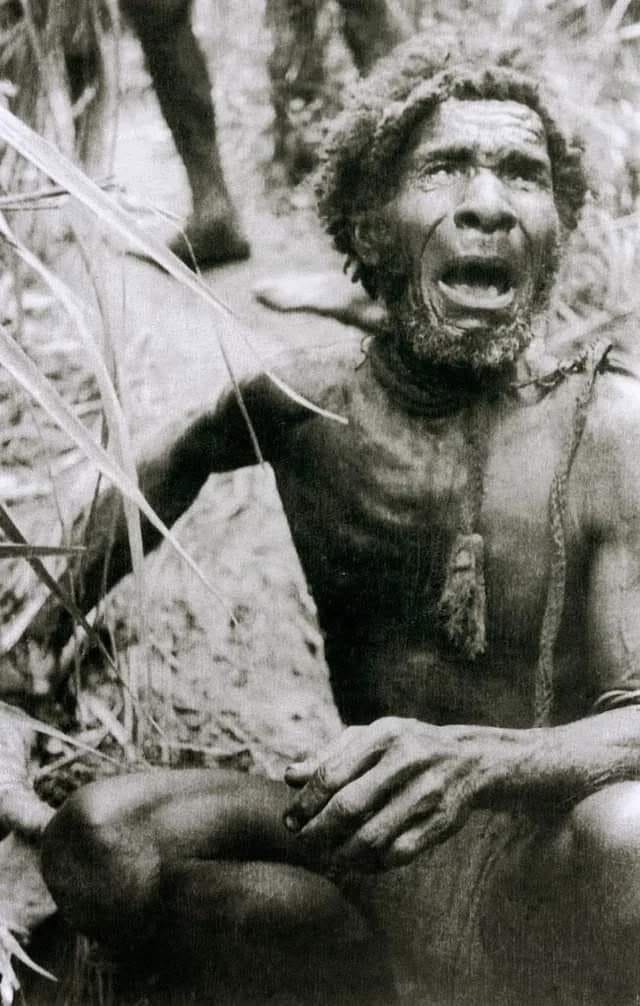
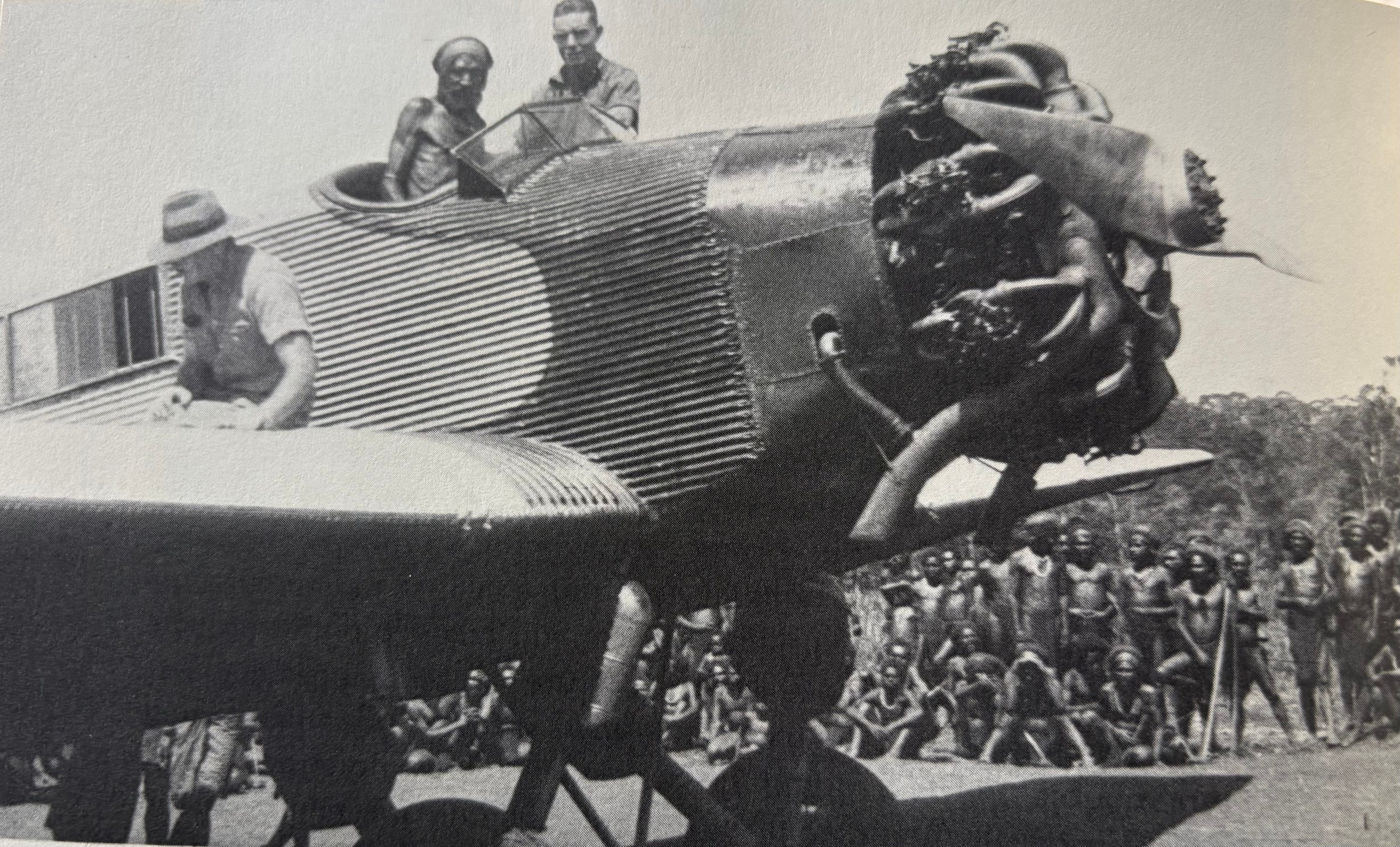
The book is not really a story, but a documentation of this exploration and first contact. Leahy brought with him high quality cameras and a movie camera, and documented with thousands of photos and hours of film the first encounter of hundreds of thousands of people. The book is filled with the most incredible photos of all the scenes surrounding this first encounter. Beyond the photos, there are details of Leahy’s next ten years exploring the highlands and accompanied by 1970s interviews with New Guineans who were living in the highlands at the point of first contact and offering their perspective.
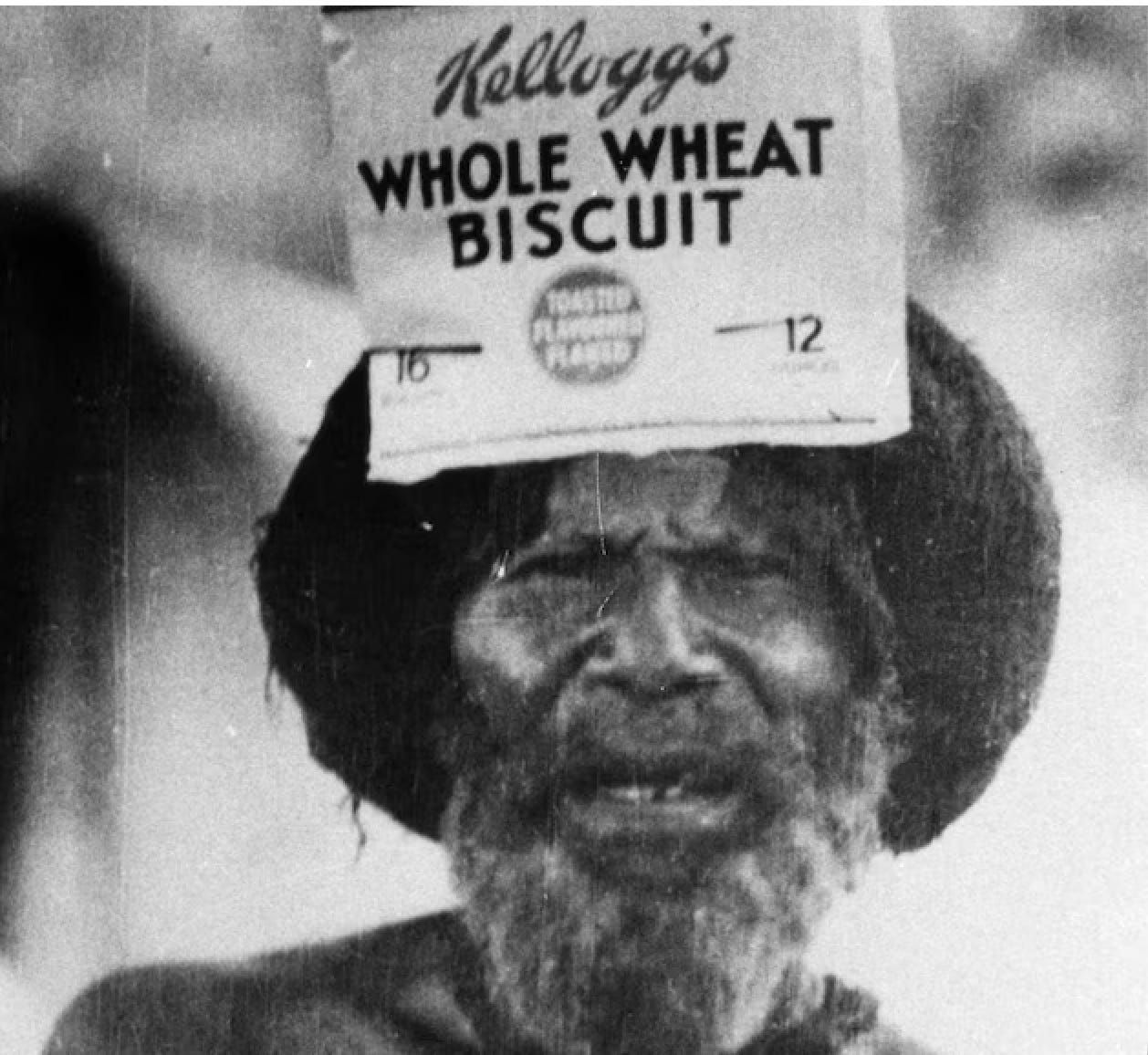
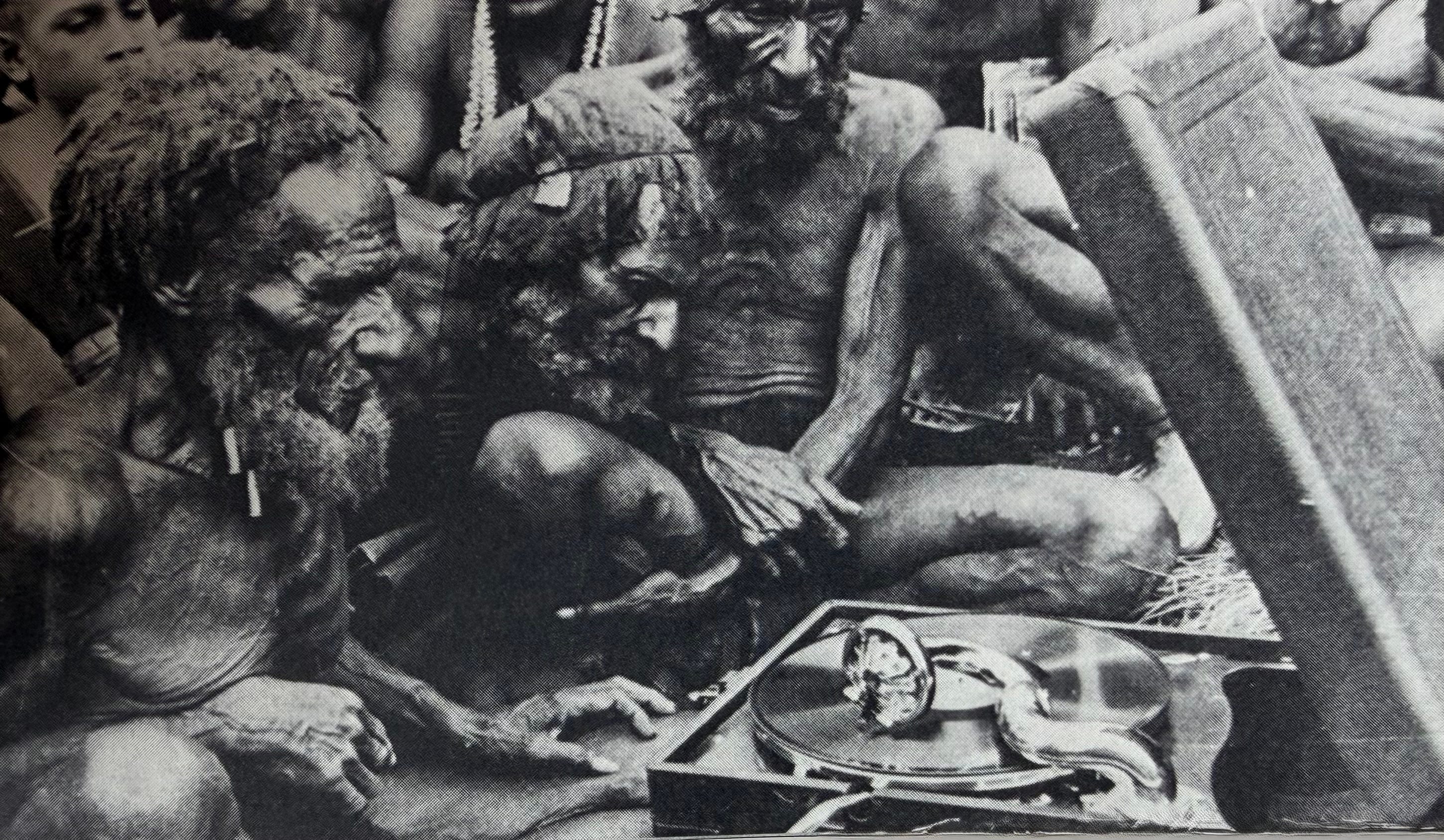
This includes descriptions of how the highlanders thought the white men were ghosts of their dead relatives at first - and then, to investigate this, spied on them defecating and smelled the poop, only to realize that they must also be human like them. How the Australians would do demonstrations of “strength” and gather whole communities to watch them shoot pigs, or make New Guineans listen to records, play with child dolls, look at themselves in mirrors, watch airplanes land etc. mostly thinking everything was a holy spirit. How highlanders would take pieces of the Australians’ garbage like a Kellogg’s cereal wrapper, and wear them around their heads as prized jewellery. And to really show the highlanders the power of their world, they would take kids on their airplanes to the coast, make them see the sea and civilization and come back, so they could report to their relatives how powerful the white men were.
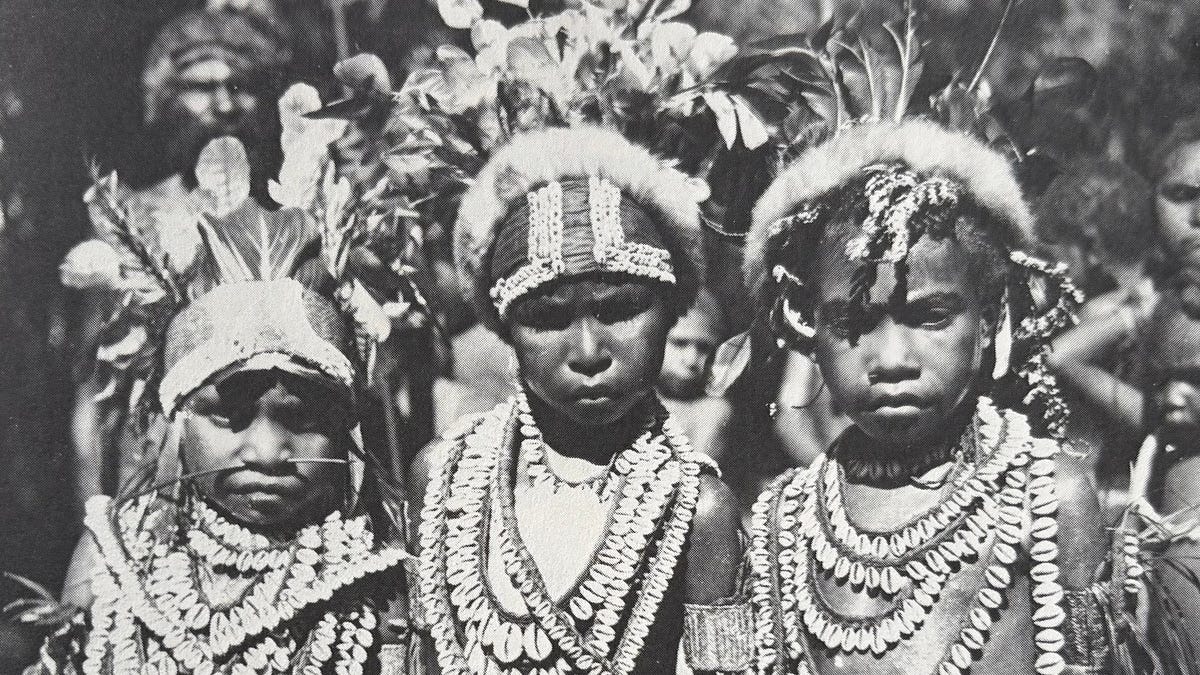
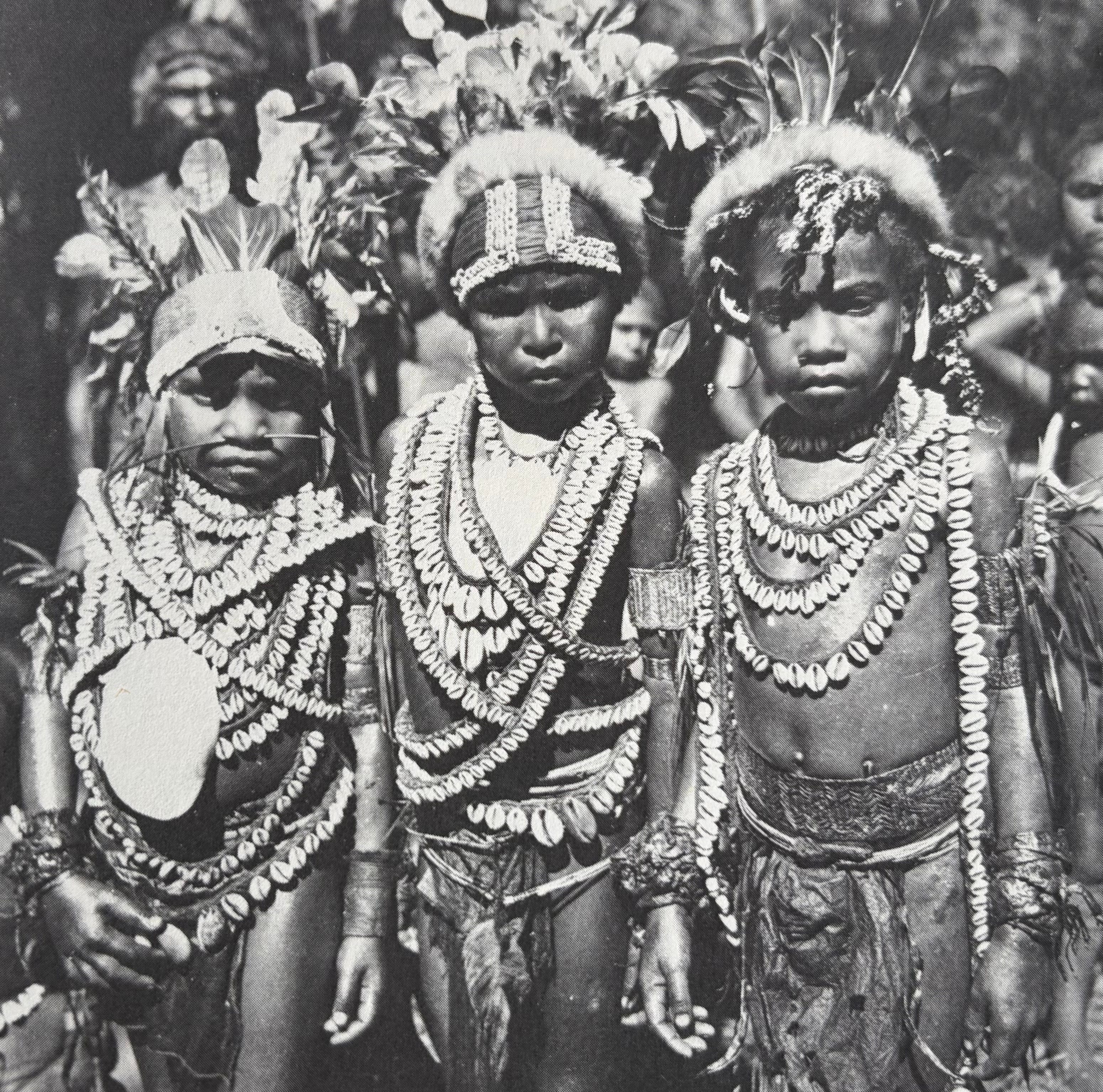
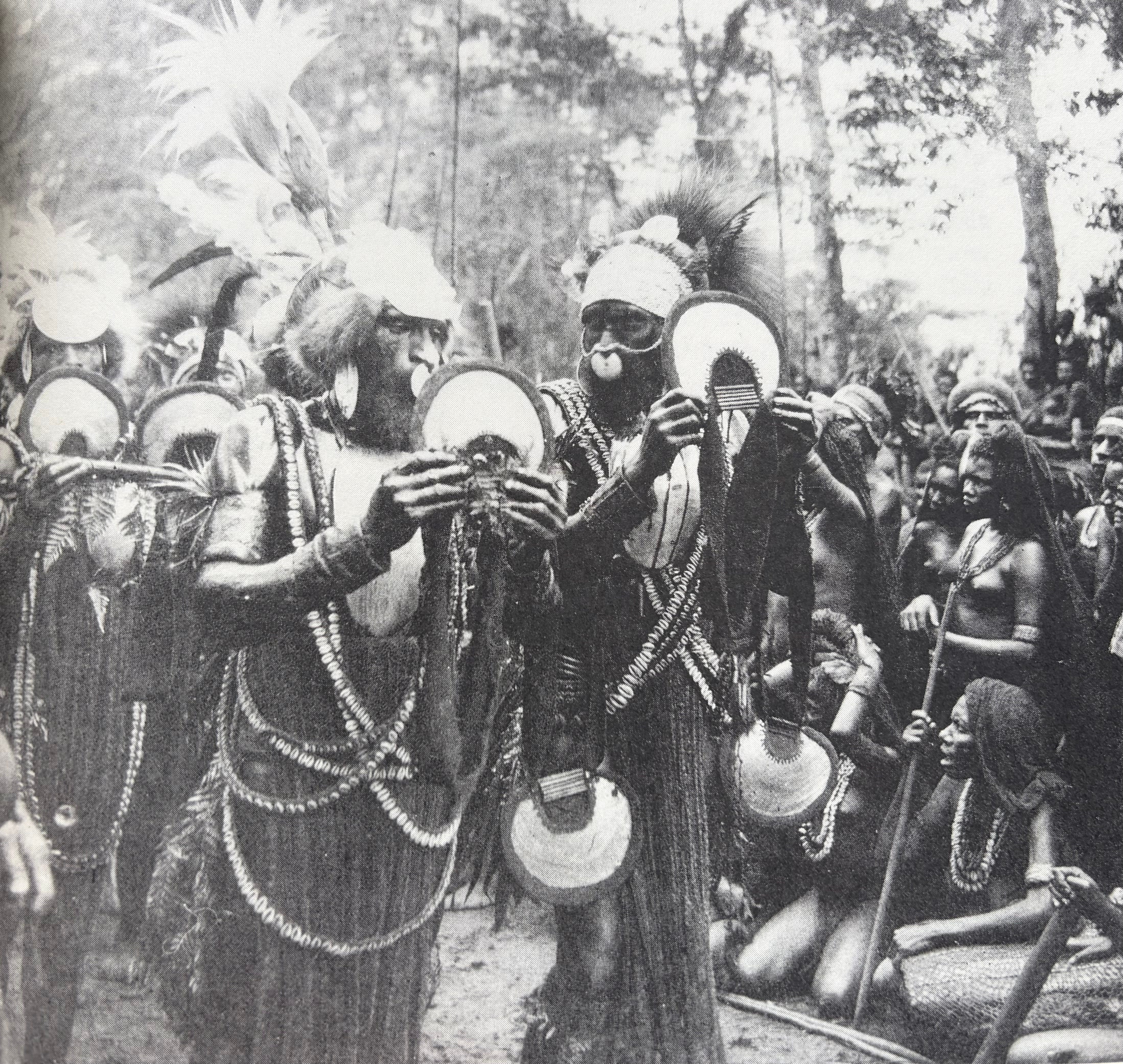
The most powerful story described in the book is the one of hyperinflation. The highlanders were obsessed with shells, then an incredibly rare commodity, the jewel that the leaders and most powerful men would wear to demonstrate their power, and the closest thing they had to a currency. But knowing this, the Australians brought shells in by the planeload, to use in exchange first for food and then also for labour. At first this felt like a great deal for the highlanders, who were willing to give up nearly everything for more shells. But the planes kept coming, and the price of everything in shells kept rising, until it went from one shell making someone a leader and “rich”, to almost all people, including children, being draped in hundreds of shells, and the shell eventually being worthless.
There is a lot more captured here in the book, but just imagine, 1,000,000 people separated from the rest of civilization for nearly all of human history, suddenly meeting a group of Australians who captured the entire exchange on photo and film.
To clarify how crazy this first encounter story is.
In 1930 (pretty frickin recently), it was thought that there was nothing in the middle of New Guinea except rock. Australian patrol officers had even walked from south to north across the whole island yet somehow entirely missed this. And then all of a sudden, some random Aussie stumbles upon the highlands and discovers a million people living there. There is no comparable first encounter story — and all of this documented in hundreds of photos and video!
To take a step back and understand how we got here: people first arrived in New Guinea around 50,000 years ago. They got there by walking and canoeing from Southeast Asia, island hopping through what is today Indonesia. These are the same people who would go on to walk south and become the Australian Aboriginal people, at the time when New Guinea and Australia were connected by land.
Various people settled on the New Guinea coast but eventually, people found their way to the highlands. Around 10,000 years ago, as agriculture took hold there and the valleys filled with people, the highlanders became functionally cut off from the coast, and stayed that way until 1930.
What fascinates me is the level of insularity of the group. Nearly all people in history existed with some integration with their neighbours and knowledge of the broader world. It’s shocking to learn of a group that lived on their own for 50,000 years, and sealed off from everyone else for the last 10,000, nearly completely divergent from the rest of humanity.
This insularity was possible because New Guinea is one of the very few places on Earth that independently invented agriculture. Around 10,000 years ago, at the same time people in the Middle East were figuring out wheat, New Guineans were draining swamps and learning to cultivate taro and bananas. Bananas and sugarcane were both first domesticated in New Guinea. To understand the impact New Guinea has on your life - the main banana variety we eat partially derives from there, as does nearly all the sugar consumed in the world.
The next thing that’s fascinating about the highlands is that different tribes never centralized and agglomerated into a larger society. It seems like this is due to a few structural reasons. In the highlands, despite the invention of agriculture, crops would go bad quickly - root crops like taro rot within weeks of being pulled out of the ground, unlike grain, which you can pile in a shed for years - so there was no produce to store, trade en masse or tax, or to take on broader projects. There were no animals to work the fields or carry anything. There was no writing to document anything. And while there was a constant supply of food, there was never enough of it, especially protein. So while each of these things seems small, together they meant that the highlands never evolved to the next stage of development and formed larger centralized communities, where cultural innovation and less warfare could have led to greater progress.
This left groups typically of a few hundred people living side by side, in constant warfare. This made travel and trade very difficult, as most highlanders were unable to travel through adjacent neighbouring zones without fear of death. It also meant that every group was focused on the same two things, feeding and defending itself, and not much else. No group ever had the motivation or capabilities to easily expand or explore past the next valley. Note, there was a broader highlands trade for salt and stone axe blades, which did make its way across multiple different adjacent groups.
Highlanders were farming thousands of years before the Egyptians. And four and a half thousand years after the pyramids went up, highlanders were still farming with the same limited technology. Without meaningful integration with the rest of the world, and with the structural factors above stopping them from ever centralizing, they had no way to evolve past this stage of development.
Despite the small communities and constant warfare, there was a surprising degree of homogeneity within the highlands. It seems that this is because things that worked travelled even when people didn’t - a better crop, a better way of building a house, a new ritual, would get copied by the neighbours they fought with and often married into, and then copied again by their neighbours. So nearly all groups eventually internalized a similar set of norms, a similar food culture and similar political institutions, without ever being part of the same political unit.
Most groups were governed by what’s referred to as a big man leader. This was fuelled by what is known as moka, a system of competitive gift giving, where you give someone in your tribe goods like a pile of pigs and shells, and they are then obligated to give you back more later, and you them more again after that. Whoever gives the most, publicly, becomes the big man. The noted problem with the big man leader is that this had to be earned in each leader’s lifetime and was not hereditary, meaning that leadership could not grow, could not think long term and was never secure - so not only was there constant external fighting, there was also constant internal fighting. Notably, in the parts of the coast settled by the Austronesians (a seafaring people who arrived from Southeast Asia about 3,000 years ago), where chiefs were hereditary, you do get different political structures.
And this leads to the most interesting part of this story: how the highlanders were so isolated for so long.
I want to acknowledge that the highlanders were not completely, hermetically sealed off from the outside world - it’s just that knowledge of outside world never actually made it to them or vice versa.
Over time, a few goods did make their way up to the highlands: pigs, about 3,000 years ago; the sweet potato, which is South American and arrived about 300 to 400 years ago; and tobacco, also American, which came the same way.
The journey the sweet potato and tobacco took to get there is a good example of how this all worked without transmitting further information. The Spanish and Portuguese brought both plants to the spice islands (in what is now Indonesia), just off the western tip of New Guinea, in the 1500s. The sultanates had been trading with the western tip of the coastal region of New Guinea for centuries. So the plants crossed over and started moving east along the coast and up into the interior. Beyond that point, there were no merchants. But when a woman married into the next clan over, she took cuttings from her family’s garden with her. Each new family then planted the same, saw that it worked, and passed it on. At that pace the sweet potato crossed the highlands in a century or two, with nobody knowing where it came from beyond the tribe beside them.
And what fascinates me is that even with the highlands as sealed off as they were, such significant goods still got in. Sweet potatoes allowed a population explosion in the highlands: they give far more calories per acre, and pigs can live off them. So in a 10,000 year sealed off universe, after the invention of agriculture, the biggest change to highland life happened in the last 500 years, which I guess isn’t a coincidence, as the sweet potato got there through the same structural forces that later brought the Australians.
Aside from these one time crop exchanges, there was a permanent flow of shells from the coastal region to the highlands, although in limited quantities. Marine shells show up in highland caves from around 10,000 years ago, so this trickle had been running for as long as there had been agriculture up there. While the highlanders did not know where the shells came from (some groups thought they came from the sky), they viewed them as the prize possession in their communities, their main fashion accessory and the basis of their currencies.
The ignorance that came with all this trade ran in both directions. For 200 years, Europeans believed that birds of paradise (birds from the New Guinea coastal region) had no feet, because when the dead bird skins left New Guinea the traders cut the feet off. Their scientific name is still Paradisaea apoda, which means footless. The shells went up the chain and lost their origin. The birds went to Europe and lost their feet.
The reason goods travelled but knowledge didn’t, I think, is that plants and animals had an easier time reproducing from one group to the next, making it easier to spread. Ideas require explanations and communication, and every handoff along that chain was between two groups who didn’t share a language and expected to attack each other.
So my understanding of how this came to be is that highlanders couldn’t really mosey around. If they approached the edge of the mountains, which was only really possible for the few small groups living in that area, and tried to go further beyond the edge of the valleys, they would face no food (their food rotted quickly) and no people, or worse, people who would treat any stranger as an enemy. The country in between isn’t a line where the highlands stop and the coast starts. It’s steep, wet, too rough to farm and low enough to have malaria, thinly populated by people living off sago and hunting who were neither quite highlanders nor coastal people. Getting from the last highland village to the first coastal one meant passing through several of these groups, each a few days’ walk from the next, none of them with any reason to go further than their own neighbours. And even if the highlanders could travel farther, they had never been exposed to malaria and wouldn’t have survived easily (when the Australians later sent highlanders to work on coastal plantations in the 1950s, they died at alarming rates).
The only place on the whole island where the two worlds nearly collide is the Markham valley near Lae, where a 1,000 metre climb over about 30 km takes you straight up onto the edge of the eastern highlands. This is where Leahy walked and first discovered the highlanders.
The reason why I believe that, despite the minimal trade that existed, the highlands were functionally cut off, is that when the Europeans occupied New Guinea, they themselves did not ever speak of or show knowledge of the highlanders. Similarly, when the highlanders first encountered Australians, they had no concept of the coastal people, or where the shells came from, or any further concept of the broader world.
The second source of evidence for this is genetic. The coastal New Guinea people have one genetic set of traits, which has been admixed with the Austronesians, a seafaring people who came from Taiwan via the Philippines to New Guinea about 3,300 years ago (and who went on to become the Polynesians). All along the coast and the islands, there is 10 to 30% Austronesian ancestry, and Austronesian languages. But when sampled, highlanders have no Austronesian admixture at all. Given how common it was for both highlanders and coastal people to offer brides to neighbouring groups for diplomatic and trade reasons, there was a lot of intergroup offspring, yet in 3,000 years, no highlander offspring mixing with the coastal people. Similarly, highlanders have no genetic adaptation to malaria, unlike the coastal people, who carry some of the densest concentrations in the world of the blood mutations that protect against it. This indicates that the highlanders never had the forcing function to develop them, and never interbred with those who did.
Lastly, there are no signs of Austronesian language, or of any of the unrelated coastal language families, making its way into the highlands.
In terms of languages, the diversity is actually almost all with the coastal people. In the highlands, there is great diversity, but everyone speaks a language that is at least from the same language family (called Trans-New Guinea — note: this is not just dialects of each other like Spanish and Portuguese are “different languages”, but with the range and diversity of English to Russian to Hindi - at the time, all without writing or an alphabet). The dozens of language families that are completely unrelated to each other, which is where the real diversity is, are almost all crammed into the north coast of New Guinea. The reason for the complete domination of this one language family, unlike the coastal region of New Guinea, is that when agriculture took off in the highlands 6,000 to 10,000 years ago, the farmers spread along the highland valleys and their language spread with them, wiping out whatever was spoken there before, the same way Indo-European wiped out almost every older language in Europe (except Basque, Finnish/Hungarian). The coastal regions never had one group or language spread like that, so 50,000 years of languages drifting apart just piled up, with the Austronesian languages layered on top 3,000 years ago.
In terms of Papua New Guinea today, it, more than any other state I’ve read about, seems to be a state living its pre-contact life. While there is an obvious level of modernization and nearly everyone is using cell phones, the state, and by extension integration with the broader world, has only minimally impacted Papua New Guinea. The reason for this is that it’s just too difficult to connect people living in such terrain and conditions at their level of wealth.
When you look at a map of Papua New Guinea, you see that the capital city, Port Moresby, doesn’t connect with anywhere. There aren’t any roads that go from Port Moresby to any other major population centre or really, anywhere outside of the city. The country has only one proper medium distance road, the Highlands Highway, which goes from Lae (the one bridge between the coastal region and the highlands - where Mick Leahy had walked all those years before) and into the mountains, but even this is only around 700 km, connects a very limited number of places, and is in such bad condition that landslides and bandits regularly close it and trucks travel in convoys to avoid being robbed. Most of the country moves by propeller planes.
In terms of language, the lingua franca of Papua New Guinea has become a language called Tok Pisin. Tok Pisin is a creole of mostly English with bits of German, formed by Melanesian indentured labourers working on plantations in Queensland, Samoa and German New Guinea in the late 1800s, who all spoke different languages and needed to communicate. Since then it has slowly spread through the coastal regions and eventually the highlands of Papua New Guinea. But even with this, language barriers are still significant.
Which brings me back to the list at the top. Nobody knows Papua New Guinea’s population because counting people requires a government/state that has a presence in each region of the country, and Papua New Guinea lacks this.
Today, the feeling of tribalism permeates the whole country. This is why Port Moresby is so dangerous - rival clans have taken their conflict with them into the urban capital. Papua New Guinea has the concept of wantok, meaning “one talk” — the people who speak your language are the people you “care” about. While Tok Pisin gave everyone in Papua New Guinea a shared language, nothing ever gave it a shared identity. The historic clan is still the main social group and there is no new central identity above it. People are still John Smith of the such and such tribe, not John Smith of Papua New Guinea.
What I find so fascinating about all of this is just how separated this group was from the rest of history, and that there will never be a finding like this ever again. The world has effectively been explored, but as late as 1930 that wasn’t the case. There are people alive today, from a very large society, who were born into a world that had never seen metal. I also wouldn’t have expected the trade to work the way it did. Plants and animals from the outside world found a way in, but technology and ideas didn’t. The sweet potato made it 1,000 km inland but the concept of the ocean didn’t. The timing of the discovery was also quite fortuitous for the highlanders. They were exposed to the outside world at a point where the world had germ theory and vaccines, so while dysentery and flu did spread through to the highlands after first contact, there was nothing like the smallpox and measles that killed most of the native population of the Americas.
So this is why I can’t stop thinking about Papua New Guinea. A people that had a completely divergent path of history - a nation living more of its pre-contact life than any other - and a first contact story entirely captured on film. I highly recommend you read First Contact, by Bob Connolly and Robin Anderson, if only just to see the pictures.