
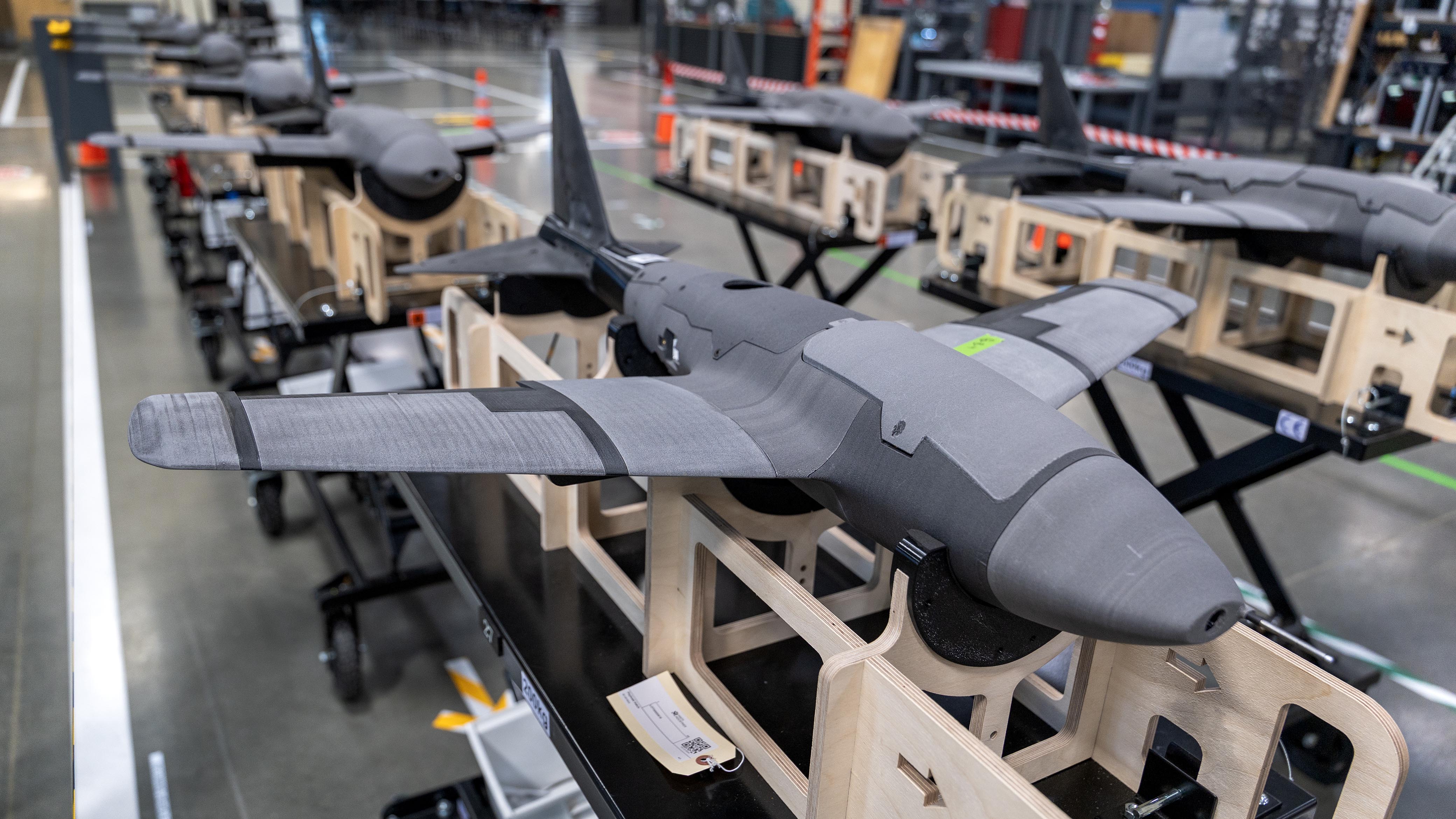
Whether greater investments can be translated into increased inventory, however, remains uncertain. New entrants tasked with building thousands of low-cost cruise missiles and hundreds of thousands of small drones will require expanded industrial capacity, reduced supply bottlenecks, and consistent funding to execute on their production goals. The DOD must rigorously assess which affordable weapons work and produce, acquire, and field them with commercial-like speed. It remains to be seen whether competition from more munitions manufacturers will drive down unit costs and shorten production lead times for traditional contractors, as well. Lockheed Martin, for example, recently announced the Patriot PAC-3 Adapted Capability Effector, an air defense interceptor that is projected to cost less than half the standard PAC-3 MSE per unit and that Lockheed intends to build “in record time.”
For the munitions industrial base to result in increased combat power, U.S. and allied weapons production should also be integrated into concepts of operations, determining which sets of capabilities are needed to deter and defeat adversaries. Joint force commanders should not only possess a broad, deep arsenal of weapons, but must also know how, when, and to what end specific systems should be wielded for a particular security challenge. Trust is important here. Commanders know the systems they have used and need to develop similar confidence in new capabilities as they come online. As recent Iranian strikes across the Middle East have illustrated, a broader, more diverse munitions industrial base should be equipped to provide not only “area defense” but also “point defense,” protecting critical U.S. and allied infrastructure and assets against higher volumes of lower-cost enemy missiles and drones.
Conclusion
The wars in Iran and Ukraine have shown how the growing importance of air and missile defense, the accelerating pace of combat, and the risk of simultaneous, protracted conflicts across multiple regions can each strain the munitions industrial base. To address these challenges, the United States needs a broad portfolio of munitions, from exquisite systems to lower-cost missiles and drones. In short, the munitions industrial base needs to be rebuilt and recast to restore deterrence and to counter the fast-evolving technologies and threats defining the character of war today. The broad trajectory outlined above is directionally on point, but requires a sustained and concerted effort by Congress, the Pentagon, and industry to send and receive long-term demand signals and invest in the underlying production capacity capable of building and sustaining inventories. There is near-term risk, but low-cost systems delivering over the next 18–24 months and ramping production of exquisite systems can get the United States on the right path. The keys to achieving the overall objectives are adequate appropriations from Congress, continued CapEx and other investment from industry, timely and flexible contracts between DOD and companies, and execution on all fronts.
Technical Notes on the Figures
This technical note provides additional details on the methodology, scope conditions, and sourcing for the calculations and information shown in the figures above.
Figure 1:
- Totals for FY 2031 are projected requests as listed in FY 2027 DOD budget materials; FY 2031 does not reflect cumulative totals from FY 2027–2031, only units for that one fiscal year.
- Totals do not reflect framework agreements the Pentagon has announced since the DOD released budget request materials on April 21, 2026, such as agreements to produce 10,000 Low-Cost Containerized Munitions by the end of 2029, and do not include potential capabilities that have yet to be developed and requested in future years.
- $600,000 per munition is the threshold used to differentiate high- and low-cost munitions. This cost amount falls between the affordable-mass programs the services are prioritizing and traditional precision munitions.
- The totals are drawn from the following DOD FY 2027 budget materials to capture the Pentagon’s plans for munitions procurement: Missile Procurement, Army; Weapons Procurement, Navy; Missile Procurement, Air Force; Missile Defense Agency; Procurement of Ammunition, Army; Procurement of Ammunition, Navy and Marine Corps; Procurement of Ammunition, Air Force.
- The totals include units of guided/precision munitions (missiles, interceptors, and guided bombs and bomb kits), excluding unguided ammunition (small-caliber, artillery, and mortar rounds), launchers, practice rockets, and fire control units.
Figure 2:
- Unit cost values are estimates found by dividing FY 2027 gross weapon costs by the number of units requested in FY 2027. When the weapon is requested by multiple branches, the sum of the costs is divided by the sum of the units.
- Totals for THAAD units from FY 2028 to FY 2031 are not directly provided in DOD budget documents; they are inferred from each fiscal year’s gross weapons cost in the Missile Procurement, Army, justification book divided by the FY 2027 unit cost.
- While both units and funding totals for SM-3 from FY 2028 to FY 2031 are not provided in DOD budget documents, DOD requested 214 SM-3 (both IIA and IB) interceptors in FY 2027 and signed a framework agreement with RTX to “increase production of SM-3 IIA and accelerate production of the SM-3 IB” from “2 to 4 times their existing production rates.” In August 2026, RTX signed a $745 million contract with the Missile Defense Agency for the production and sustainment of SM-3 IIA interceptors.
Figure 3:
- Subsequent framework agreements have been announced with key munitions suppliers, while this chart captures initial framework agreements with prime contractors.
- DOD initiations include the Pentagon’s formal request for solutions for the Drone Dominance Program on December 17, 2025; the release of DOD FY 2027 budget materials, which outlined five-year requests for FAMM and MACE, on April 21, 2026; the U.S. Army’s announcement of plans to solicit white papers for the Army LCI on June 23, 2026; and the Missile Defense Agency’s request for solicitation of white papers for the MDA LCI on September 4, 2025.
- Expected first delivery dates for operational units of FAMM, MACE, and LCCM are inferred from industry announcements and congressional committee hearings; the first production of Drone Dominance units are based on the testimony of Travis Metz, Drone Dominance Program Manager, before the Senate Armed Services Committee on March 5, 2026; for FAMM, based on the testimony of General Kenneth Wilsbach before the Senate Appropriations Committee on June 10, 2026.
- On July 29, 2026, Lockheed Martin and the DOD announced a $53.9 billion undefinitized contract action (UCA), building from a $4.7 billion award in April to bring the total to $58.6 billion. A UCA is a contract award that lets work begin before all terms (particularly price) are finalized.
- On February 12, 2026, Director of the Defense Innovation Unit and Senior Advisor for Drone Dominance Owen West said in his testimony to the Senate Armed Services Committee that the first “gauntlet” would conclude “in early March, when approximately $150 million in prototype delivery orders will be placed among a dozen expected winners.”
- On June 12, 2026, Castelion and the DOD announced a $23.4 million firm-fixed price order for 50 pre-production prototypes of the Blackbeard hypersonic cruise strike missile as part of the MACE program. This award built from two previous Navy contracts for Blackbeard, a $49.9 million award in February 2026 and a $105 million award in April 2026.
- While production objectives for Drone Dominance and LCCM are in number of units produced, those for FAMM and MACE reflect units the DOD plans to request through FY 2031.
- Framework agreement production objectives include the units that will be sold as foreign military sales or direct commercial sales, meaning the Pentagon will not procure the entire volume.
- Contracts signed for emerging/low-cost munitions have been primarily firm-fixed price contracts, or contracts that set a single, binding price at the time of award and shift cost risk to the contractor.
Figure 4:
- British defense contractor BAE Systems also signed a framework agreement with the Pentagon. While the firm’s reports for the first six months showed £377 million in 2026, down from £400 million in 2025 and £396 million in 2024, its president and CEO announced in the half-year FY 2026 earnings call that the U.S. business plans to increase capital expenditures year-on-year by around 40 percent, “driven in large part by munitions production acceleration.”
- RTX, Boeing, and Honeywell Aerospace capital expenditures include investments in their significant non-defense units.
Jerry McGinn is director of the Center for the Industrial Base and senior fellow in the Defense and Security Department at the Center for Strategic and International Studies (CSIS) in Washington, D.C. A.J. Dilts is senior program manager in the Defense and Security Department at CSIS.
The authors are grateful for the expeditious work by Lauren Adler, Hunter Macdonald, and Kharle Wu in editing and formatting this article.