
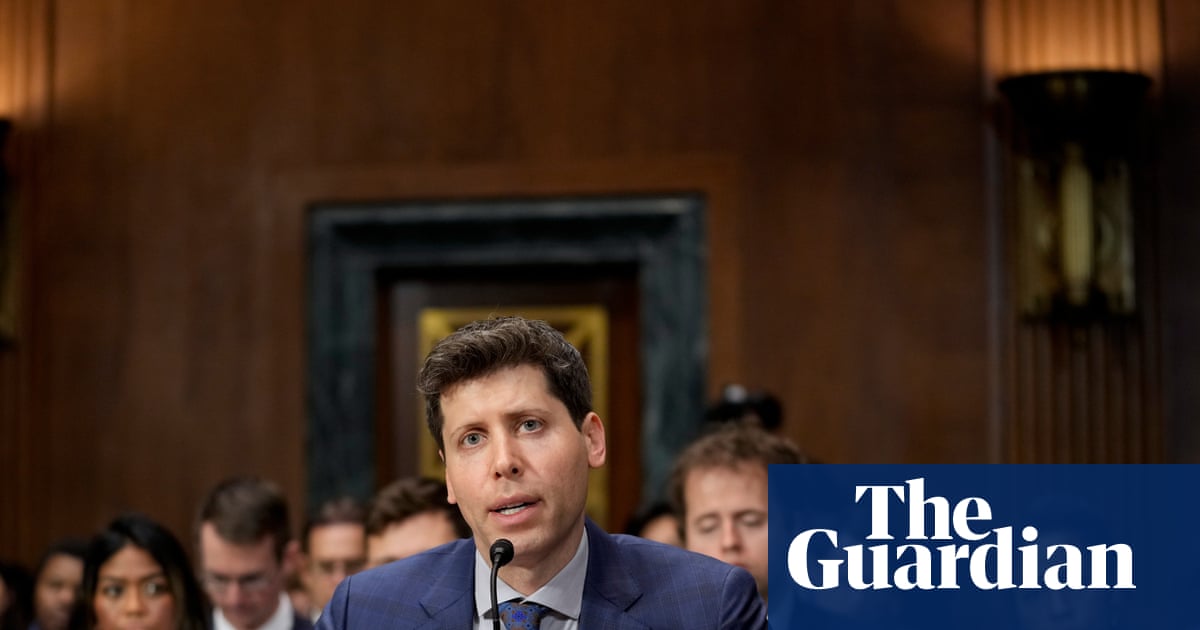
Sam Altman says he believes the world should accept “bad things” happening with AI in exchange for the benefits of the technology.
The chief executive of OpenAI cited hacks, scams and “other bad things that will happen” in an interview that sparked an instant backlash from critics of the major AI companies. His comments came after one of his company’s safety experts resigned, saying at the weekend that its “culture is broken”.
In an interview released on Monday, Altman was asked about how OpenAI’s approach to safety differed from that of Anthropic, which has called for the industry to slow down after one of its researchers quit, warning that AI experts believed “it could kill us all by the end of the decade”.
“I think there’s a lot of daylight,” Altman said. “One of the differences between us and some of the stricter AI safety people is that we believe that the world should accept some bad things happening for the benefits of this technology and people having the agency [to use AI widely].
“I do think the lighter touch regulatory stance we advocate for comes with an accepting of the fact that some bad things are going to happen as society figures out the resilience.
“I wouldn’t take a trade of saying we will make sure there’s no major hacks, there’s no misuse of this technology, there’s zero scams or all the other bad things that will happen because I think that people will do tremendously – orders of magnitude – more good stuff than bad stuff.”
The interview for Politico’s Decoded podcast drew a strong response from Ron DeSantis, the governor of Florida. He said he had “no dice” with the idea “a handful of tech oligarchs get to make that decision [on safety] for the rest of us”.
His state last week asked a judge to bar OpenAI from developing new AI models without third-party approved guardrails.
Gary Marcus, a prominent AI sceptic and professor emeritus at New York University, said Altman was “saying the quiet part out loud: suck it up, so you can make us rich and powerful”.
OpenAI was hit by multiple safety crises over the summer, including when a swarm of its AI agents escaped their training “sandbox”, cheated, deceived and conspired to hack into the Hugging Face website. Other agents accessed Australian government data.
The company has scrapped the release of a cutting-edge model but Altman’s comments reflect a more bullish mood ahead of a stock market flotation.
The wave of public and political concern last month about the potentially catastrophic consequences of fast-progressing AI agents that act beyond human intent had led to hopes of US-wide or even international safety agreements.
after newsletter promotion
However, Donald Trump and AI bosses including Altman and Dario Amodei of Anthropic signed a far more laissez-faire pact at the White House last week. The US president said he wanted the companies to “self-police” to limit the risks from AI-enabled cyber-attacks and bioweapons.
Geoffrey Irving, who worked at OpenAI and Google DeepMind and as chief scientist at the UK’s AI Safety Institute, said warnings about AI risks understated the dangers.
“There’s about a 50% chance we all die because of the development of smarter-than-human AI systems,” he said, adding that actions taken over the next two to 10 years would be decisive.
OpenAI’s David Robinson announced his departure at the weekend, saying “the companies building this technology aren’t being nearly careful enough” as they sprint from one product launch to the next.
His view was endorsed by Miles Brundage, an AI policy researcher who worked at OpenAI for six years. He said he regretted helping “spread the idea of iterative deployment”, which may have made sense when AI was less powerful “but makes no sense at all after many deaths have been tied to AI and as we’re careening towards extinction-level risks”.